
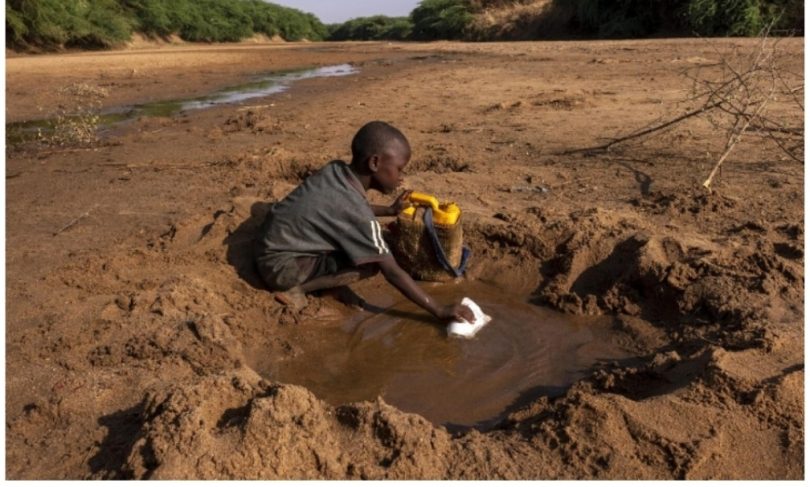

The 39th Ordinary Session of the Assembly of Heads of State and Government of the African Union opened on Saturday in Addis Ababa under a theme that goes to the heart of Africa’s development paradox: “Assuring Sustainable Water Availability and Safe Sanitation Systems to Achieve the Goals of Agenda 2063.”
Water is life. But in Africa, it is also politics, economics, climate strategy, public health, and peacebuilding. The choice of theme signals a deliberate pivot. If Agenda 2063 is the blueprint for “The Africa We Want,” then water security and safe sanitation are not peripheral utilities. They are foundational infrastructure for prosperity, dignity, and continental integration.
A Summit of Strategic Convergence
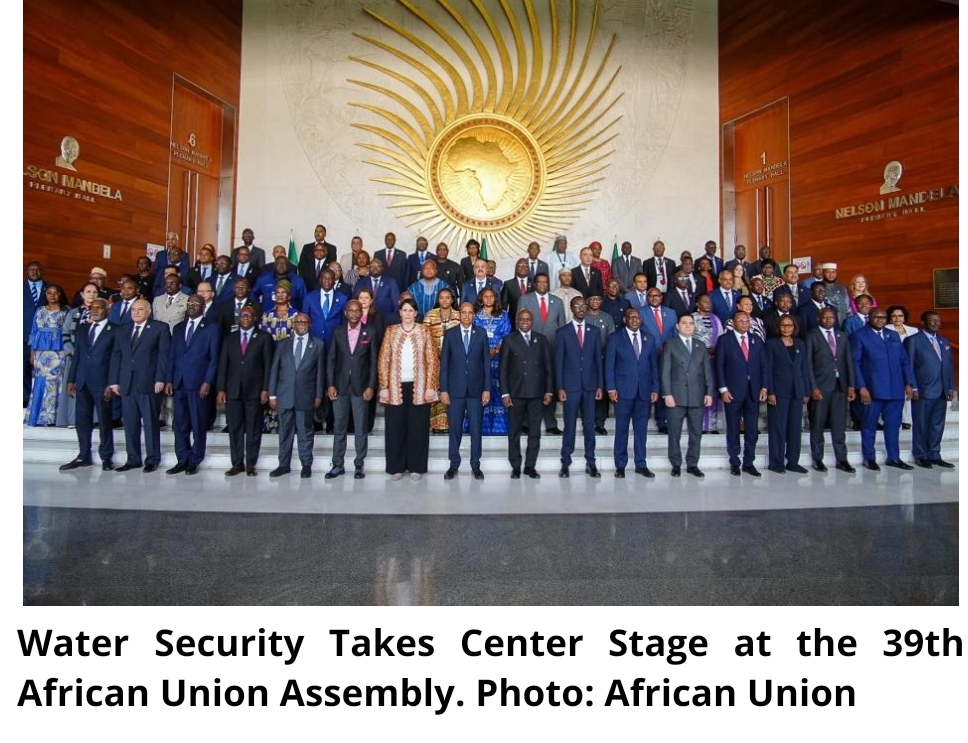
The Assembly meeting brought together a high-level constellation of leaders and partners. Algerian Prime Minister Sifi Ghrieb attended, representing President Abdelmadjid Tebboune. Also present were António Guterres, Secretary General of the United Nations; Ahmed Aboul Gheit, Secretary General of the Arab League; Mahmoud Abbas, President of the State of Palestine; and the summit’s guest of honor, Giorgia Meloni, Prime Minister of Italy.
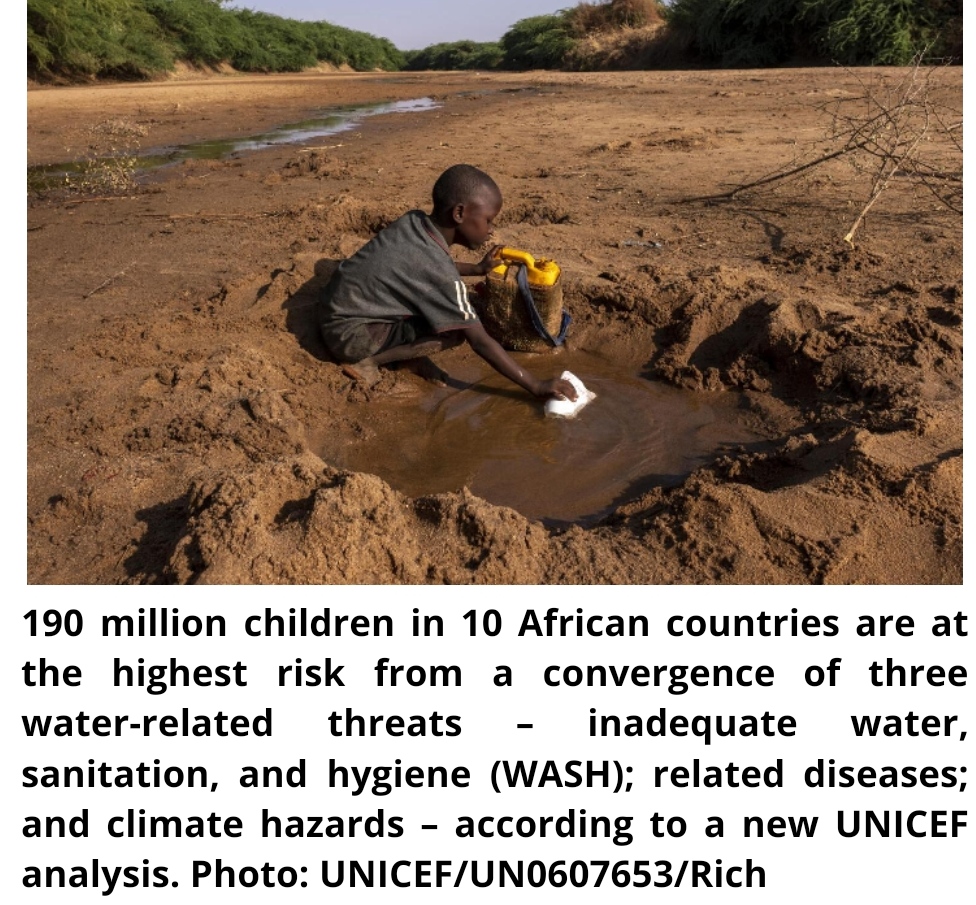
Their presence elevated the importance of the meeting beyond just an annual event. Africa’s water and sanitation agenda is continental in design but global in consequence. Climate disruptions, migration pressures, food security shocks, and conflict spillovers are interlinked with how effectively African states manage shared water basins, urban sanitation systems, and rural access to clean water.
Over two days, leaders were expected to sharpen continental coordination, align national priorities, and reinforce economic, political, and social integration. In practical terms, that means moving beyond declarations to implementation frameworks, financing pipelines, and measurable accountability mechanisms.
Water as a Collective Good and Peace Dividend
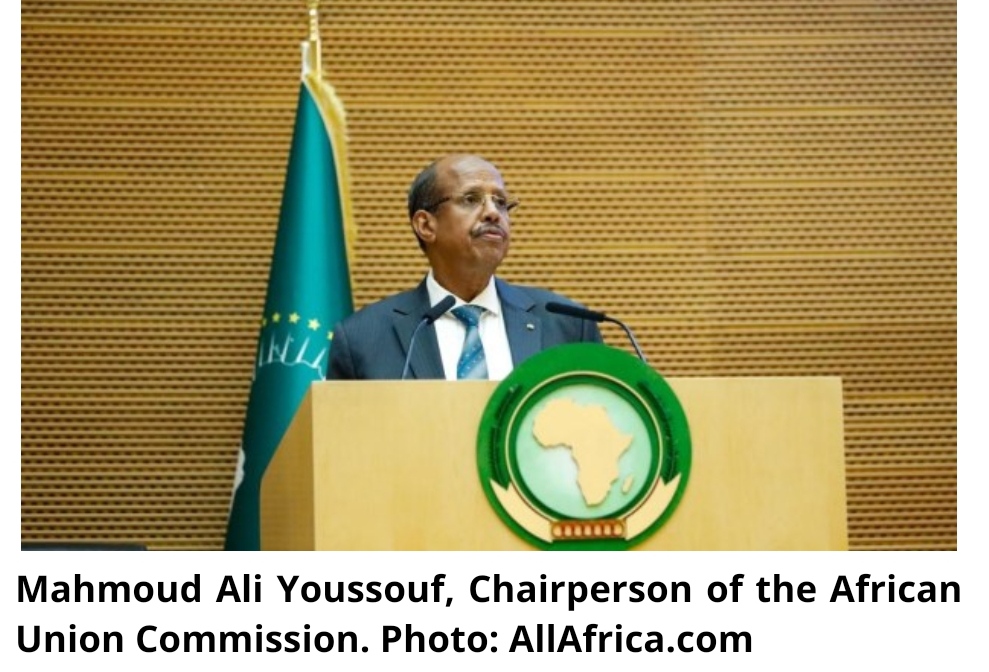
The Chairperson of the AU Commission, H.E. Mahmoud Ali Youssouf, framed water not merely as a resource but as a collective continental asset. In the face of climate volatility, erratic rainfall patterns, and rising water stress, he argued that prudent use of water is no longer optional; it is imperative. Water, he stressed, must be preserved at all costs and leveraged as a vector for bringing African states closer together and consolidating peace.
This reframing is strategic. In regions such as the Sahel and the Horn of Africa, resource scarcity compounds insecurity. Competition over water and grazing land can accelerate communal tensions and feed into broader instability. By contrast, shared water governance arrangements can function as confidence-building measures among states and communities.
In that sense, the water and sanitation theme is inseparable from the mandate of the African Union Peace and Security Council, whose 2025 activities were tabled for review. Security is not only about ceasefires and mediation. It is also about managing ecological stressors before they metastasize into conflict.
Reform, Governance, and Institutional Credibility
Beyond thematic focus, this Assembly session is also unfolding within a broader institutional recalibration. The AU Commission highlighted progress on its validated 2024 to 2028 strategic plan and the ongoing implementation of institutional reforms, coordinated with reform champion President H.E. William Ruto of Kenya.
The Executive Council also examined updates on the Skills Assessment and Competence Audit process, draft legal instruments, and the scale of assessment and contributions. Financing remains the perennial constraint. Water infrastructure, sanitation systems, climate-resilient irrigation, and wastewater treatment facilities demand long-term capital investments. Member state contributions, innovative financing, and private sector participation must converge if the water agenda is to move from aspiration to delivery.
Political Instability and Democratic Regression
No summit in Africa can afford to bracket out governance and political stability. The AU Commission Chairperson expressed concern over persistent political instability, unconstitutional changes of government, and terrorist threats in the Sahel and the Horn of Africa.
While welcoming the return to constitutional order in Gabon and Guinea, he acknowledged regressions elsewhere. This matters for water and sanitation policy. Fragile states often experience institutional breakdowns that disrupt basic service delivery. Infrastructure maintenance falters, donor support becomes erratic, and public health risks escalate.
Sustainable water availability is not insulated from governance quality. It depends on stable institutions, transparent procurement systems, community trust, and effective decentralization. Without constitutional order and accountable leadership, even well-designed water systems degrade.
Development Architecture and AfCFTA Momentum
On the development front, tangible progress was cited through the African Continental Free Trade Area. The AfCFTA is not merely a trade arrangement. It is a structural instrument for reshaping Africa’s economic geography.
A functioning continental market creates scale. Scale attracts investment. Investment can be channeled into cross-border infrastructure, including transboundary water management systems, sanitation technology manufacturing, and climate-smart agricultural value chains.
The Executive Secretary of the United Nations Economic Commission for Africa, Claver Gatete, reinforced this economic pivot. Africa, he argued, can no longer rely on outdated development models built on commodity exports and external financing. In an era of global economic fragmentation and tightening fiscal space, Africa must organize its development around its own continental economic system, with AfCFTA at its core.
Water and sanitation fit squarely within this new paradigm. Instead of importing solutions, Africa can build regional value chains around water technologies, wastewater recycling systems, and climate-resilient irrigation. This approach not only addresses public health and environmental concerns but also stimulates industrialization and job creation.
Agenda 2063 and the Reparations Discourse
The Assembly agenda also included a report on the AU’s 2025 theme, “Justice for Africans and People of African Descent through Reparations.” This report outlines activities undertaken by member states in pursuit of historical justice.
At first glance, reparations and water security may appear conceptually distant. Yet both are anchored in structural equity. Historical exploitation and extractive economic models have shaped Africa’s development trajectory. Addressing water deficits and sanitation gaps is part of correcting systemic imbalances that have left millions without basic services.
Agenda 2063 is explicit in its ambition. It envisions a prosperous Africa based on inclusive growth and sustainable development. Water and sanitation are embedded within this vision. They influence maternal mortality rates, educational attainment for girls, agricultural productivity, and urban livability. They are development multipliers.
Ethiopia, COP 32, and Climate Justice
Ethiopia’s Foreign Minister, H.E. Gedion Timothewos, highlighted Africa’s collective stances on United Nations Security Council reform and climate justice, while acknowledging the disruptive effects of geopolitical competition and external exploitation.
As Ethiopia prepares to host COP 32, climate diplomacy will intensify. Water is the frontline of climate change. Floods, droughts, glacial melt, and erratic rainfall patterns directly affect availability and sanitation systems. Africa’s climate justice narrative must therefore integrate water resilience as a central pillar.
This is not only about adaptation funding. It is about securing fair global partnerships, ensuring meaningful representation in international forums, and articulating African-led priorities in global negotiations.
G20 Engagement and Global Positioning
Another item on the Assembly’s agenda was the Union’s participation in the most recent summit of the Group of 20. Since the AU became a permanent member of the G20, its leverage within global economic governance has expanded.
Water financing, climate adaptation funds, debt restructuring, and sustainable infrastructure investment are all issues that intersect with G20 deliberations. A coherent African position enhances bargaining power. It also ensures that global financial reforms account for the continent’s unique vulnerabilities and development aspirations.