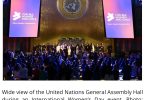

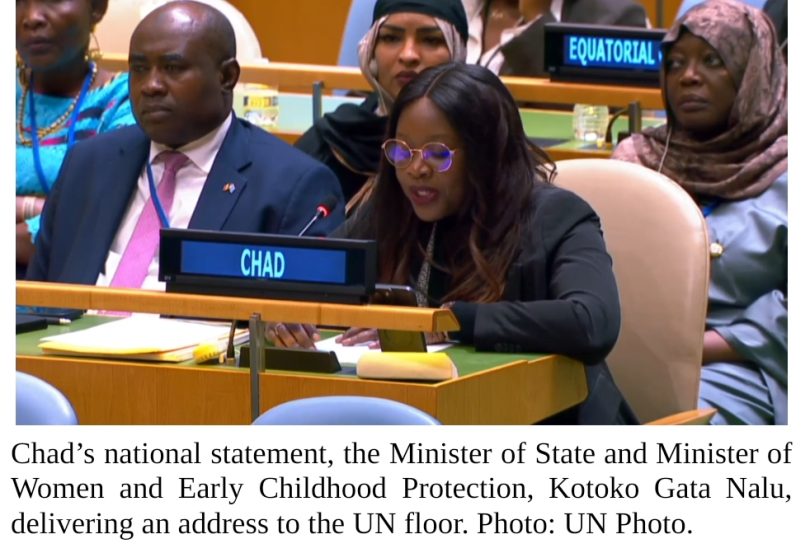

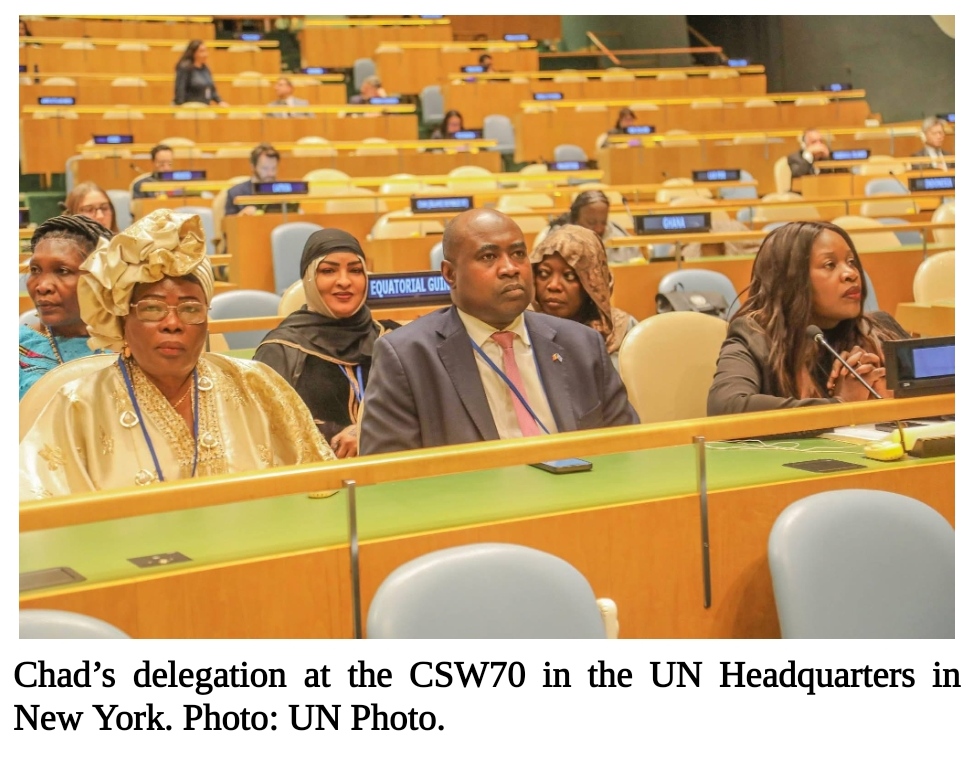
Chad has reaffirmed its commitment to strengthening legal protections and improving access to justice for women and girls as global leaders gathered for the 70th session of the United Nations Commission on the Status of Women at the United Nations Headquarters in New York.
Presenting Chad’s national statement, the Minister of State and Minister of Women and Early Childhood Protection, Kotoko Gata Nalu, spoke on how her government’s plans align with those of the event.
“The theme of this session, dedicated to strengthening access to justice for all women and girls, lies at the heart of the priorities of the government of Chad,” she told delegates, stressing that justice and equality remain essential pillars for sustainable national development.
She noted that ensuring women and girls can fully access justice is not merely a legal obligation but a prerequisite for genuine gender equality. According to her, Chad has taken concrete steps in recent years to reinforce the legal and institutional framework protecting women’s rights.
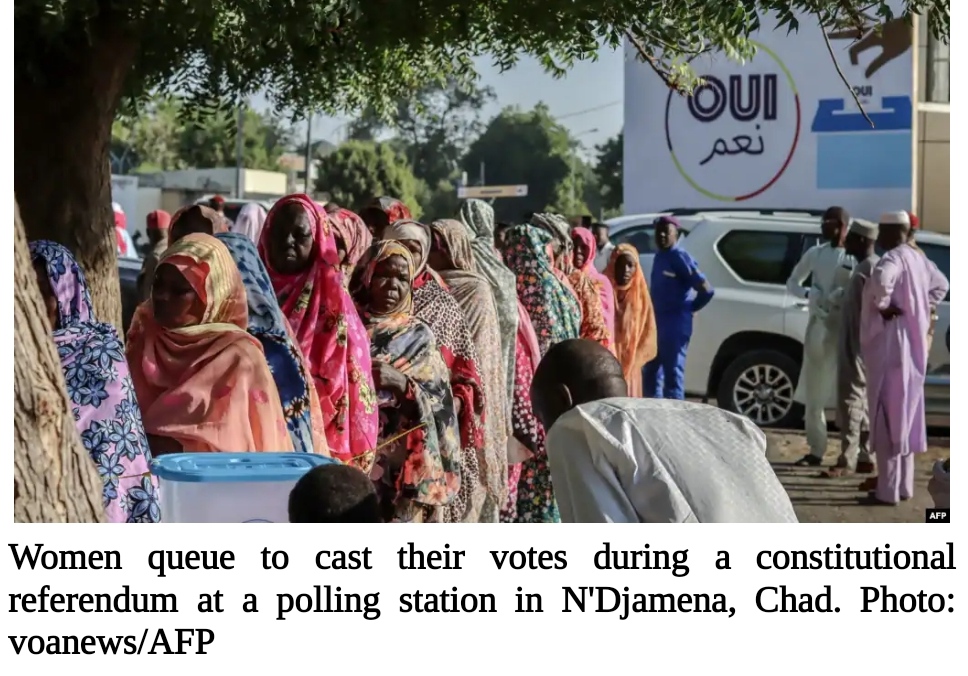
One of the most significant developments has been the adoption of the Constitution of the Fifth Republic in 2023, which formally enshrines the principles of equality and non-discrimination. The minister said the constitutional reform reflects the country’s determination to place gender equality within the core of its governance framework.
Beyond constitutional provisions, she told the floor that Chad has strengthened its legislative system by criminalizing several harmful practices and forms of violence that disproportionately affect women and girls. These include female genital mutilation, child marriage and domestic violence, along with broader measures targeting discrimination.
These legal reforms, the minister explained, are complemented by policy initiatives aimed at ensuring that protections on paper translate into real access to services and justice for victims.
Among these initiatives is the adoption of a National Women’s Policy designed to guide gender related programmes and institutional reforms across government sectors. In addition, Chad has implemented a national action plan aligned with the Women, Peace and Security agenda established under United Nations Security Council Resolution 1325 for the period 2023 to 2027.
The government has also introduced a national strategy to combat gender based violence, aimed at strengthening prevention efforts and improving support services available to survivors.
As part of the strategy, integrated centres providing care and assistance for survivors of violence have been established in several areas. These centres offer legal, medical and psychosocial services intended to help survivors navigate the justice system and recover from abuse.
“We have established integrated centres for the care of survivors of violence,” the minister noted, explaining that the facilities are designed to bring together essential services under one structure to improve support for victims.
In addition, Kotoko says that Chad has introduced a national hotline that allows individuals to report cases of violence and seek immediate assistance. Authorities believe that such mechanisms will improve reporting and ensure faster responses to incidents of abuse.
Alongside legal protection and victim support systems, the government has also placed strong emphasis on women’s economic empowerment. According to the minister, expanding women’s participation in economic life is central to achieving sustainable development and social stability.
To support this objective, Chad has launched the National Programme for the Economic and Social Empowerment of Women, a government-funded initiative aimed at strengthening women’s economic independence and access to opportunities.
The minister said early progress is already visible in the area of women’s participation in public life. Legislative reforms introducing parity measures have led to a significant increase in women’s representation in national institutions.
“Thanks to the law on parity, female representation has now reached over 34% in parliament,” she said, adding that women’s participation continues to grow across other areas of public administration.
Despite these achievements, the government acknowledges that important challenges remain. The minister stressed that ensuring effective access to justice across all regions of the country will require sustained investments and stronger institutional capacity.
Effective access to justice, the protection of survivors of violence and women’s economic empowerment still require substantial investments,” she said.
Looking ahead, Chad plans to strengthen national programmes while deepening cooperation with international partners. Key priorities include expanding survivor support centres to all provinces, promoting women’s entrepreneurship and improving access for girls to education in science, technology and mathematics.
She emphasized that these initiatives form part of a broader effort to ensure that women and girls can fully participate in national development and benefit from equal opportunities.
Concluding her remarks, the minister underscored that access to justice must move beyond policy commitments to become a lived reality for women and girls.
“Access to justice for women and girls must not remain an abstract principle,” she said. “It must become a concrete reality for all.”
Chad, she added, remains committed to working with international partners and multilateral institutions to advance gender equality and build a more inclusive and equitable society.