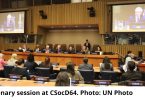


From 9 to 19 March 2026, global leaders, policymakers, and civil society representatives will gather at United Nations Headquarters in New York for the 70th session of the United Nations Commission on the Status of Women. The landmark meeting is the United Nations’ largest annual gathering dedicated to advancing gender equality and the rights of women and girls worldwide.
The session will bring together representatives of Member States, United Nations entities, and non-governmental organisations accredited to the United Nations Economic and Social Council from across all regions of the world. Over the course of ten days of deliberations, participants will examine urgent global challenges facing women and girls and identify concrete policy actions to strengthen justice systems, eliminate discrimination, and advance gender equality.
A Global Forum at a Critical Moment
The 2026 session convenes at a time of mounting global concern over shrinking democratic space and persistent inequalities in legal systems that affect women and girls. Despite decades of international commitments, legal equality remains elusive in many parts of the world. According to international assessments, women globally possess only about 64% of the legal rights available to men.
These disparities have far-reaching consequences, influencing access to education, employment, safety, and participation in public life. Legal inequality can affect entire societies, shaping economic opportunity, political representation, and social stability across generations.
Against this backdrop, CSW70 aims to mobilise governments, civil society, and international institutions to address systemic barriers that continue to restrict women’s access to justice.
Priority Theme: Access to Justice for Women and Girls
The central focus of the session will be the priority theme: ensuring and strengthening access to justice for all women and girls. Discussions will explore how governments and institutions can build inclusive and equitable legal systems that guarantee rights, eliminate discriminatory laws and policies, and remove structural barriers that prevent women from seeking justice.
Delegates will examine how legal inequality manifests in everyday life and how reform of national legal frameworks can ensure greater accountability and protection for women and girls. Particular attention will be paid to closing legal loopholes, strengthening law enforcement, and ensuring that justice systems are adequately resourced.
Among the policy actions expected to feature prominently in the discussions are efforts to end impunity for violence against women, reform discriminatory legislation, expand funding for legal aid and survivor-centered justice services, and support women’s organizations working on legal reform and rights advocacy. Participants will also explore how technology and improved data systems can help deliver justice more effectively while addressing emerging challenges such as algorithmic bias, online abuse, and the spread of misinformation.
Review Theme: Participation in Public Life
In addition to the priority theme, the Commission will conduct a review of progress related to commitments adopted during the sixty-fifth session of the Commission. This review theme focuses on women’s full and effective participation in public life and decision-making, as well as efforts to eliminate violence against women and girls.
The review will provide Member States with an opportunity to assess how far the international community has advanced in strengthening women’s leadership in governance, political representation, and policymaking. It will also highlight the continuing need to address structural barriers that prevent women from participating fully in public and political life.
Leadership of the Commission
The work of the Commission is guided by a bureau composed of representatives from five regional groups. The Bureau for the seventieth session is chaired by Maritza Chan Valverde of Costa Rica, representing the Latin American and Caribbean States Group.
The Vice-Chairs include Samah Dbouk of Lebanon for the Asia and Pacific States Group, Noah Oehri of Liechtenstein for the Western European and Other States Group, Andreea Mocanu of Romania representing the Eastern European States Group, and Flavia Umulisa of Rwanda for the African States Group.
The Bureau plays a key role in guiding preparations for the Commission’s sessions and facilitating negotiations among Member States.
Major Programme Highlights
The programme of CSW70 will feature a series of high-level meetings, dialogues, and side events designed to examine key aspects of the session’s themes and promote collaboration between governments, international organizations, and civil society.
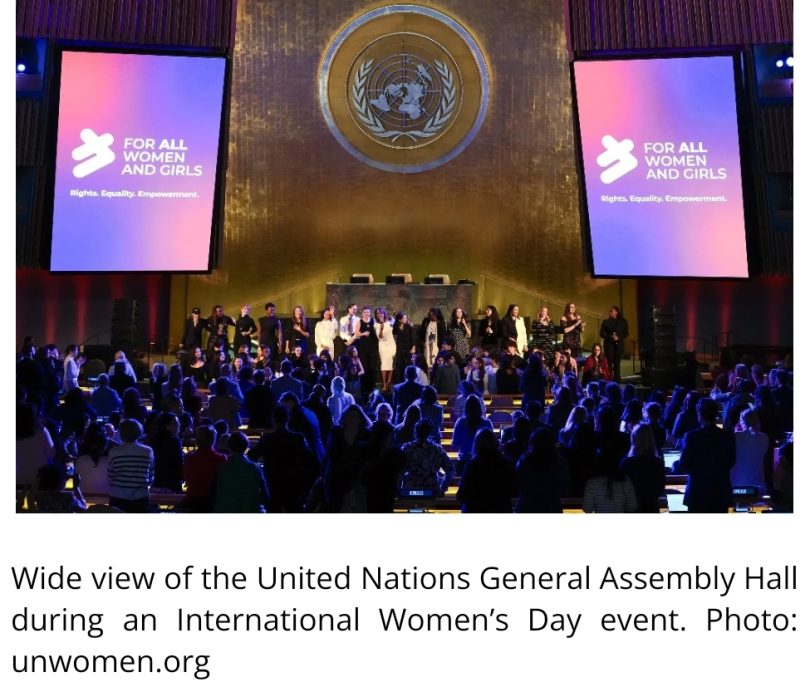
The session will formally open on 9 March in the United Nations General Assembly Hall following the United Nations observance of International Women’s Day 2026. Held under the theme “Rights. Justice. Action. For ALL Women and Girls,” the observance will bring together senior UN officials, diplomats, civil society leaders, and youth representatives to mark global progress on gender equality and highlight the challenges that remain.
The official opening of CSW70 will include remarks from the Chair of the Commission, the Presidents of the General Assembly and the Economic and Social Council, as well as the Secretary-General of the United Nations. Representatives from civil society and youth networks will also address the gathering.
On 10 March, a town hall meeting between the UN Secretary-General and civil society representatives will provide a platform for open dialogue on global gender equality challenges and the role of grassroots organisations in advancing women’s rights.
Another key event on the same day will examine systemic gaps in justice systems and explore strategies to ensure fair and inclusive legal frameworks for women and girls worldwide.
The following day, discussions will turn to the role of national parliaments in promoting gender parity and ensuring gender-responsive access to justice. The meeting will also mark the launch of the latest Women in Politics Map, presenting updated global data on women’s representation in executive leadership and national legislatures.
Additional high-level discussions will focus on strengthening justice systems in fragile and conflict-affected contexts, highlighting innovative approaches and reforms emerging from different regions of the world.
On 12 March, Member States will convene a high-level meeting dedicated to preventing violence against women and girls and strengthening survivor-centred responses. The gathering will explore strategies to address both offline and online forms of violence, including the growing prevalence of digital harassment and abuse.
This meeting will also examine policy frameworks that have proven effective in protecting survivors, improving reporting mechanisms, and strengthening legal accountability for perpetrators.
Youth Engagement
Young people will play a prominent role in the programme of CSW70. Prior to the opening of the session, a youth forum titled “Voices Without Borders” will bring together two hundred young feminists and allies from around the world. The forum will serve as a platform for youth-led discussions on systemic injustices and innovative solutions to advance gender equality.
Later in the session, an interactive youth dialogue will provide another opportunity for young leaders to share their experiences and perspectives on strengthening access to justice for women and girls.
Civil Society Participation
Non-governmental organizations are expected to play a central role in the session. NGOs accredited to the Economic and Social Council have been invited to participate in the official proceedings, contribute to discussions, and organize side events that highlight grassroots perspectives and policy solutions.
Expected Outcomes
As in previous sessions, the main outcome of CSW70 will take the form of negotiated agreed conclusions adopted by Member States. These conclusions will outline policy recommendations and commitments aimed at strengthening access to justice for women and girls and advancing gender equality.
The conclusions are expected to guide national policy reforms, inform international cooperation efforts, and shape the global gender equality agenda in the years ahead.