
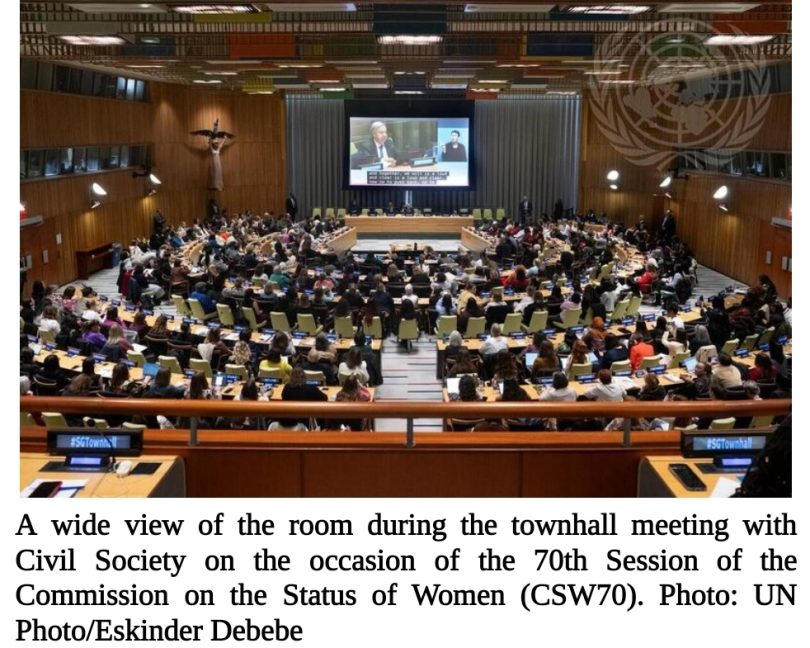

The just concluded 70th Session of the Commission on the Status of Women closed with a clear and uncompromising signal: access to justice is no longer a peripheral concern in the gender equality agenda; it is the architecture upon which every other right must stand.
Convening two Heads of State, one Vice President, five Deputy Prime Ministers, and 75 ministers, alongside more than 4,600 civil society representatives and 255 side events, the scale of engagement underscored both urgency and global consensus.
At the center of its outcomes were historic Agreed Conclusions that decisively placed women’s and girls’ access to justice at the heart of the global gender equality framework.
Justice as the Foundation, Not the Outcome.
Executive Director of UN Women, Sima Bahous, framed the stakes in unequivocal terms:
“Gender equality and women’s rights are the foundation on which our peace, security, economic prosperity, and sustainable development ambitions rely. Without their equal access to justice, our nations will not progress.”
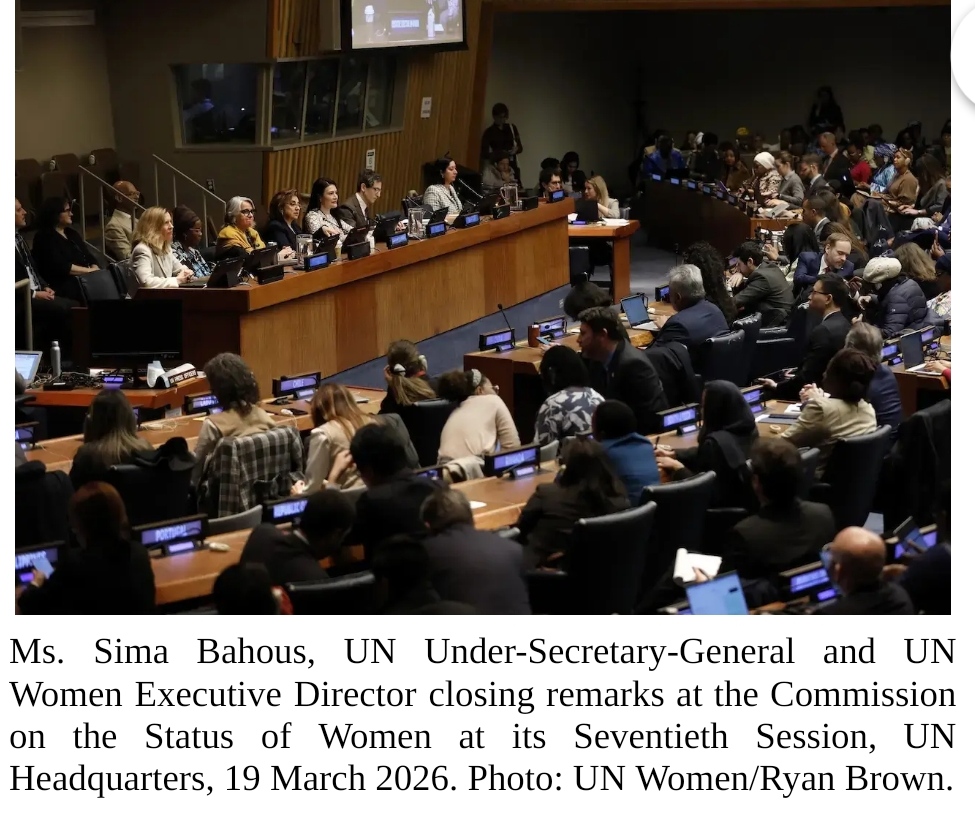
Her intervention went beyond rhetoric, setting out a concrete policy direction for governments: review discriminatory laws, strengthen responses to violence, and ensure universal access to legal aid. Importantly, the Conclusions broke new ground by formally recognizing community justice workers and paralegals as critical actors, while also bringing long-overlooked groups such as women in detention into the justice conversation.
Yet, Bahous also pointed to the uneven geography of injustice. From Afghanistan to Gaza, Sudan to Somalia, women in crisis settings continue to bear disproportionate costs, reinforcing the need for justice systems that are not only accessible but resilient under pressure.
Chair of CSW70, Maritza Chan Valverde, distilled the session’s core thesis with precision:
“Access to justice is the answer. The mechanism that transforms a right into a remedy.”
Her framing cut through the abstraction that often defines multilateral outcomes. The issue is not the existence of rights, but their enforceability. Courts remain inaccessible to many women. Legal remedies arrive too late, or not at all. The distance between law and lived reality remains vast.
“What was agreed here has to reach the women it was written for,” she noted. “The road between law and life is long.”
A More Complex Multilateral Terrain
Beyond consensus, CSW70 was also marked by friction that revealed deeper shifts within the multilateral system. A controversial proposal by the United States seeking to redefine the term “gender” within the UN framework triggered a procedural and political standoff.
Led by Belgium on behalf of the European Union, a motion of no action was successfully tabled, blocking the resolution outright. The move, backed by a coalition of Member States including Brazil, reflected both substantive disagreement and procedural resistance to last-minute norm-setting without negotiation.
The implications are significant. The contest is no longer limited to policy outcomes but extends to the rules of engagement themselves. The integrity of previously agreed frameworks, particularly the Beijing Platform for Action, is now an active site of geopolitical negotiation.
Civil society and organized labor, particularly through advocacy from Public Services International, played a decisive role in shaping this outcome, reinforcing the increasingly influential position of non-state actors in multilateral processes.
Institutional Renewal and Structural Shifts
CSW70 also marked the first session following the adoption of a revitalization framework under ECOSOC. The changes were not cosmetic. The Agreed Conclusions were streamlined to 10 pages, increasing clarity and focus. More importantly, new formats were introduced: a multi-stakeholder hearing, a high-level forum on violence against women, and a ministerial roundtable on older women.
These additions expanded both participation and policy depth, ensuring that the agenda is not only negotiated at the top but informed across levels.
Education, Legislation, and Africa’s Strategic Position
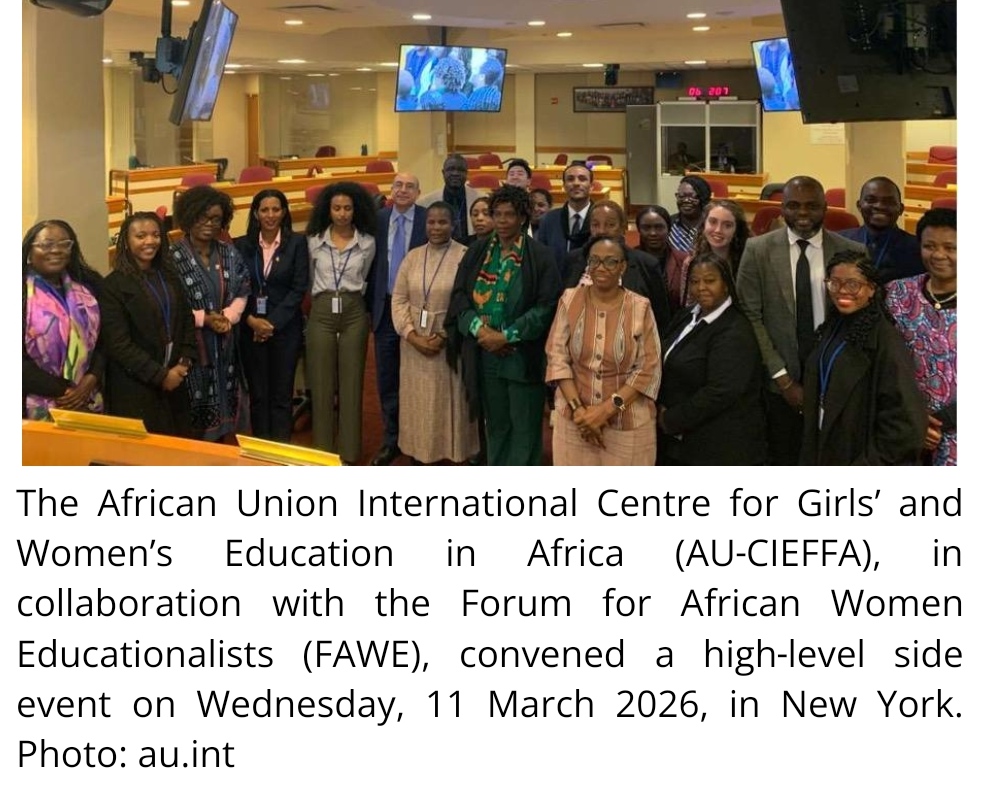
A notable contribution came from the African policy ecosystem. The African Union International Centre for Girls’ and Women’s Education in Africa, in collaboration with the Forum for African Women Educationalists, convened a high-level side event focused on legislative reform for girls’ education.
Anchored in frameworks such as Agenda 2063, discussions emphasized that justice in education extends beyond access to include safety, equity, and representation. Legislative harmonization, elimination of discriminatory laws, and sustainable financing emerged as priority levers.
As noted by Gaspard Banyankimbona, “When we harness girls’ education, we reimagine and rebuild communities.”
This aligns directly with CSW70’s broader thesis: justice is systemic. It must be embedded across institutions, not confined to courtrooms.
Looking Ahead: From CSW70 to CSW71
With 2030 approaching, the Commission issued a sobering reminder: no indicators under Sustainable Development Goal 5 have been fully met. CSW71 is expected to shift focus toward a comprehensive assessment of gender equality across all SDGs, raising the stakes for implementation.
The closing message from Bahous captured the dual reality of the moment: progress is visible, but fragile; commitments are strong, but insufficient without execution.