

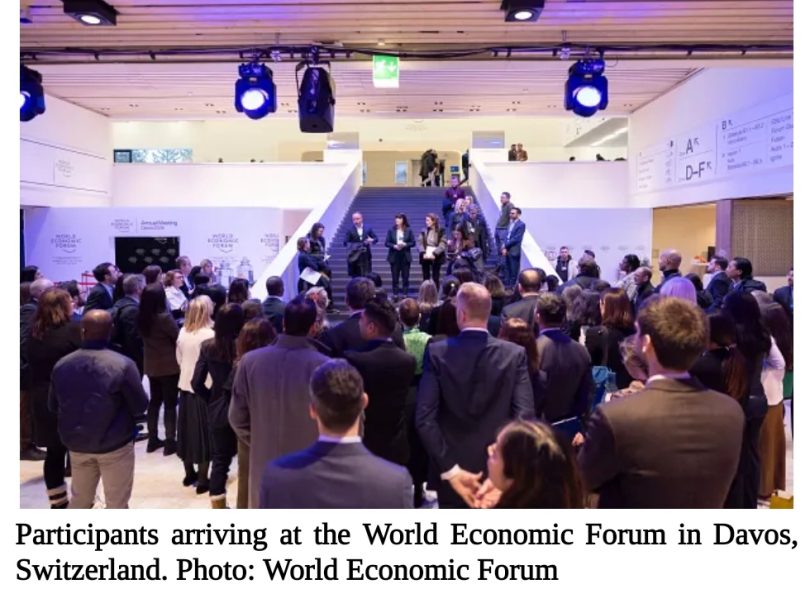

From 19 to 23 January 2026, global attention turns once again to Davos, Switzerland, as the World Economic Forum convenes its 56th Annual Meeting under the theme “A Spirit of Dialogue”.
Coexisting in a period of particular geopolitical fragmentation, economic uncertainty, technological disruption, and accelerating climate risks, the meeting arrives at a pivotal moment for international cooperation.
This year’s gathering brings together leaders from government, business, civil society, science, and culture to confront the defining questions of the age. At its core, Davos 2026 seeks to reaffirm dialogue not as a diplomatic courtesy, but as an urgent instrument for rebuilding trust, navigating complexity, and shaping a more resilient global future.
More than a conference, the Annual Meeting continues the Forum’s five-decade tradition of convening decision-makers across geographies and ideologies to engage in candid exchange, challenge assumptions, and translate ideas into collective action.
A Spirit of Dialogue in a Fractured World
The theme of the 56th Annual Meeting, A Spirit of Dialogue, reflects both urgency and intent. As geopolitical tensions intensify with countries taking military actions that put strain on the fabric of international law, the need for open, constructive engagement has never been more pronounced.
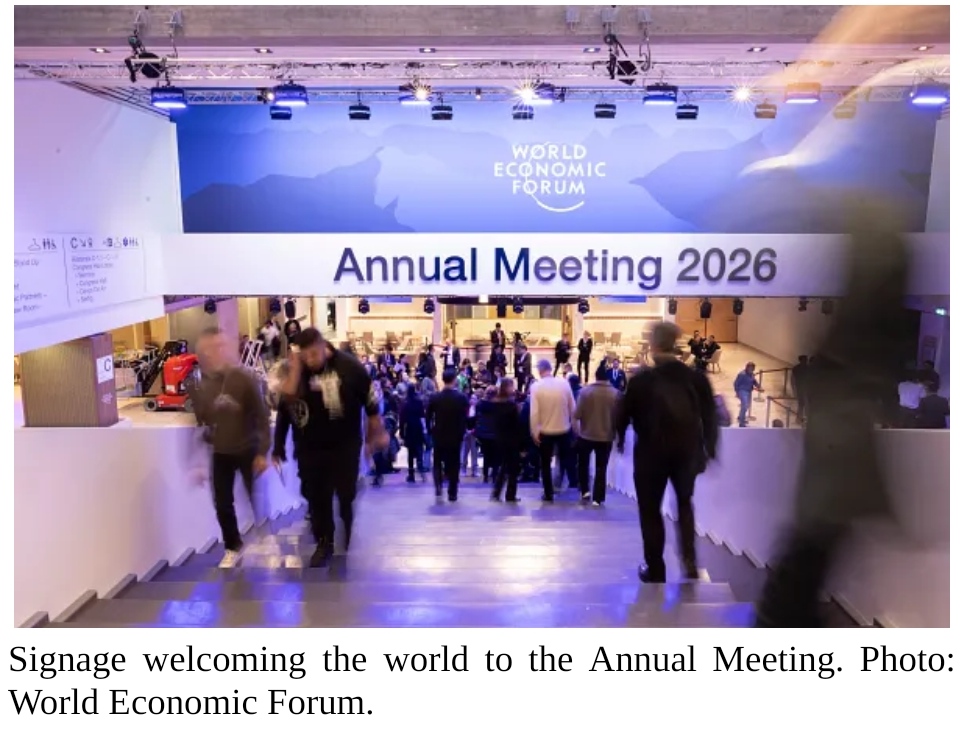
The Forum describes this spirit as an attitude grounded in openness, cooperation, and the willingness to listen across difference. In a world increasingly defined by polarization and competing narratives, dialogue becomes not merely desirable but essential to sustaining peace, prosperity, and shared progress.
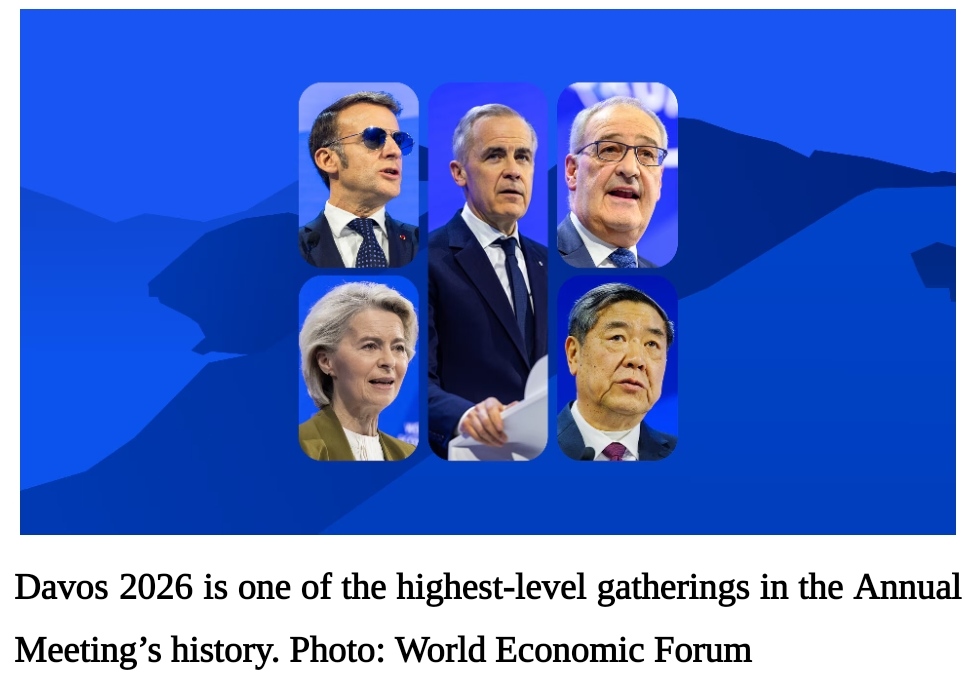
Davos 2026 is among the most significant editions in the Forum’s history. The meeting convenes nearly 3,000 participants, including close to 65 heads of state and government, leaders of major international organizations, nearly 850 chief executives, and representatives from academia, civil society, and the media.
In this context, the Annual Meeting serves as both a diagnostic and a platform for action, enabling leaders to confront shared risks while identifying opportunities for cooperation.
The Forum has also reinforced its commitment to transparency and public engagement, with extensive livestreaming, a full digital media experience, and more than 400 journalists covering discussions throughout the week.
The Five Pillars Shaping Davos 2026
The programme of the 56th Annual Meeting is anchored around five interconnected global challenges that define today’s policy and economic landscape.
- Cooperation in a Contested World
The erosion of trust between nations, the reordering of alliances, and the resurgence of geopolitical competition have placed unprecedented strain on multilateralism. Long-standing assumptions about security, trade, and governance are being reexamined, while new fault lines continue to emerge.
Discussions under this pillar explore how cooperation can be rebuilt in an era marked by rivalry and uncertainty. Leaders will examine new models for diplomacy, regional collaboration, and global governance that reflect today’s realities rather than yesterday’s institutions.
- Unlocking New Sources of Growth
As global growth slows and traditional engines of expansion weaken, attention has turned to innovation, productivity, and human capital as drivers of future prosperity.
Davos 2026 will examine how advances in technology, particularly generative artificial intelligence, can unlock new economic value while avoiding systemic risk. While AI holds the potential to add trillions of dollars to global GDP, concerns persist around market concentration, workforce displacement, and speculative investment bubbles.
Leaders will also be addressing how emerging and advanced economies alike can foster sustainable growth amid shifting supply chains, demographic change, and tightening financial conditions.
- Investing in People
One of the defining challenges of the coming decade is the transformation of work. According to the World Economic Forum’s Future of Jobs Report 2025, one in four jobs is expected to change by 2030, with nearly 40% of existing skills becoming obsolete.
Technological change, demographic transitions, and the green economy are reshaping labor markets at speed. In response, Davos 2026 places strong emphasis on reskilling, workforce resilience, and inclusive job creation.
Public-private collaboration is central to this agenda, with discussions focused on how governments, businesses, and educational institutions can prepare societies for the jobs of tomorrow while ensuring that no communities are left behind.
- Deploying Innovation Responsibly
Innovation sits at the heart of modern economic transformation, yet its benefits are not automatically equitable or safe. As artificial intelligence converges with quantum computing, synthetic biology, and advanced manufacturing, the pace of change is accelerating beyond traditional regulatory frameworks.
The meeting will explore how emerging technologies can be scaled responsibly, balancing speed with ethics, inclusion, and accountability. Participants will also examine how innovation can be directed toward solving real-world challenges, from healthcare access to climate adaptation and energy security.
- Building Prosperity Within Planetary Boundaries
Environmental sustainability stands as one of the defining imperatives of the decade. Nature loss now affects over 75% of the planet’s land surface, creating both ecological and economic risks.
Davos 2026 hopes to emphasize the opportunity embedded in the transition to nature-positive and circular economic models. Forum research suggests that such a shift could unlock up to 10 trillion dollars in annual economic value by 2030.
Leaders will be exploring how governments and businesses can accelerate climate action, scale clean energy solutions, and align economic growth with environmental stewardship. Public-private collaboration remains essential to maintaining momentum and translating commitments into measurable impact.
Voices Shaping the Global Conversation
The 2026 Annual Meeting features an unprecedented lineup of global leaders addressing the world’s most pressing challenges.
World Economic Forum President and CEO Børge Brende already set the tone for the week, emphasizing the urgency of dialogue in an era of uncertainty. “Dialogue is not a luxury in times of uncertainty; it is an urgent necessity,” he noted, underscoring the Forum’s role as a convener of trust.
Swiss President Guy Parmelin and European Commission President Ursula von der Leyen are billed to welcome all the participants. From Asia, Chinese Vice-Premier He Lifeng and Qatari Prime Minister Sheikh Mohammed bin Abdulrahman Al Thani are expected to give addresses.
The meeting will feature contributions from leaders, including Donald Trump, President of the United States of America; French President Emmanuel Macron; Friedrich Merz, Federal Chancellor of Germany; Javier Milei, President of Argentina; Canadian Prime Minister Mark Carney; Prabowo Subianto, President of Indonesia; Ilham Aliyev, President of the Republic of Azerbaijan; Bart De Wever, Prime Minister of Belgium; Gustavo Petro, President of Colombia; Félix-Antoine Tshisekedi Tshilombo, and over 50 more, reflecting the truly global scope of the gathering.
A Platform for Dialogue, Action, and Accountability
Beyond speeches and panels, Davos 2026 functions as a working platform. It is designed to foster candid exchange, enable cross-sector partnerships, and generate actionable outcomes that extend beyond the meeting itself.
The Forum’s commitment to openness is reflected in its extensive public programming, live broadcasts, and digital engagement, ensuring that the conversations taking place in Davos resonate far beyond the Alpine town.