

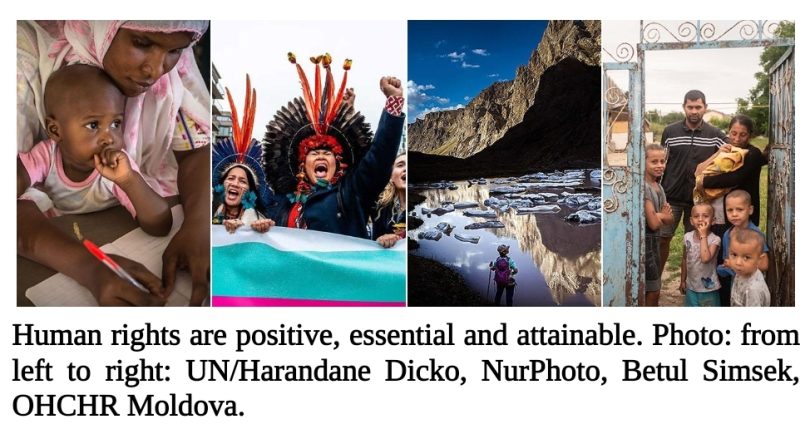

Human Rights Day in 2025 arrives at a tense moment in our shared global story. With issues currently ongoing in Palestine, the turmoil in Yemen and Sudan, across continents, people are living through turbulence. Many feel unsafe. Many feel unseen. Many feels disconnected from the systems that should protect them. Yet in the middle of this uncertainty, the world pauses on 10 December to reaffirm something simple but powerful that human rights are the essentials we rely on every single day.
This year’s theme, “Human Rights, Our Everyday Essentials,” is a reminder that human rights are not abstract theories sitting in long documents or far-away meetings. They live in how we wake up, move through society, express ourselves, learn, work, connect, and hope. They guide decisions. They shape opportunities. They support dignity. And they make it possible for us to dream of a better life.
In a time when disaffection and alienation are rising, the theme serves as a gentle nudge to look closely at the rights that quietly strengthen our everyday lives. Rights to safety. To justice. To voice. To identity. To opportunity. To information. To education. To privacy. To community. These are not luxuries. They are essentials.
The global campaign this year focuses on bridging the gap between human rights principles and everyday experiences. The goal is to spark new awareness, inspire confidence, and encourage collective action. It is also a reminder that human rights are not distant, heavy goals. They are possible. They are positive. They are worth defending. And they belong to everyone.
The Universal Declaration of Human Rights.
Human Rights Day marks the anniversary of the Universal Declaration of Human Rights (UDHR), adopted on 10 December 1948 in Paris. It remains one of the world’s boldest promises, a shared pledge that every human being has dignity, no matter their race, color, religion, sex, language, beliefs, origin, or status.
The UDHR is not simply a historic text. It is a living guide that has shaped constitutions, legal systems, policies, and movements for more than seven decades. It is the foundation of the global vision for peace, fairness, and sustainable development. It is also the most translated document on Earth, published in 577 languages from Abkhaz to Zulu, showing the universal desire for freedom and justice.
A Two-Day Push Toward the Future
The celebration this year was anchored by two major events. The first is the RightsX Summit, held at the historic Palais Wilson in Geneva. The second is Unleashing Human Rights, a powerful youth-centered forum in Budapest. Together, they painted a clear picture of the world’s priorities: innovation, education, and the courageous leadership of young people.
Day 1 in Geneva
The first day of the RightsX Summit opened with the theme “From Reflection to Action: Building the Future of Human Rights in the Digital Age.” The digital age has transformed how rights are protected, violated, and understood. It has created new opportunities but also new dangers.
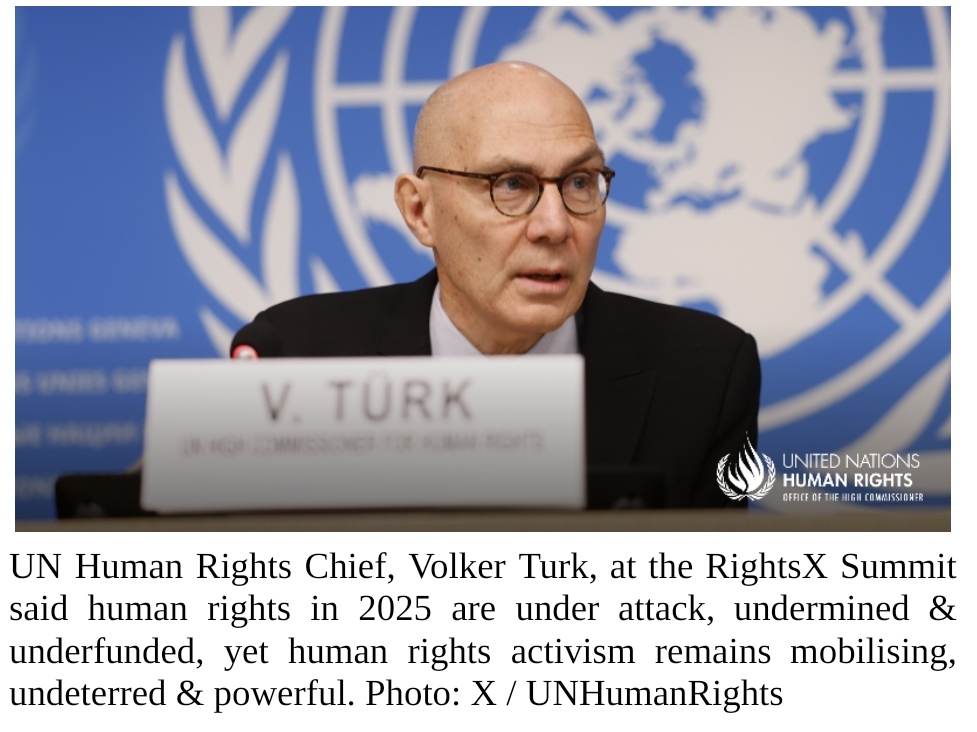
The sessions began with remarks from Volker Türk, the UN High Commissioner for Human Rights. His message was clear: human rights must remain the compass that guides technological progress. Innovation without ethics is dangerous. Innovation rooted in human dignity is transformative.
The keynote address by Sam Gregory explored the crossroads of morality, politics, and technology. Artificial intelligence, data systems, and digital tools are reshaping power and access. The question is no longer whether technology will shape society. It is whether people will shape technology in a way that protects rights.
A high-level dialogue followed, bringing together thought leaders like Gina Neff, Claudia Roda, and Angela Oduor Lungati. Their message echoed across the room, “innovation needs human rights, and human rights need innovation. The two must grow together.”
Lightning talks then explored the power of data, dignity, and digital partnerships. The speakers highlighted how new tools can protect vulnerable communities, track abuses in real time, and strengthen early warning systems. The afternoon moved into roundtables focused on protests, responsible AI, peace-building technologies, and global data governance.
Day 1 closed with showcases and announcements that signaled a future powered by collaboration. From IBM’s Call for Code award to the global youth climate initiatives, the message was simple: innovation must serve humanity.
Day 2 in Geneva
The second day of the summit carried the theme “From Innovation to Infrastructure: Powering the Human Rights System of the Future.” The day opened with a mindfulness reflection by Professor Jon Kabat Zinn, grounding the conversation in human presence and responsibility.
One of the most engaging moments was the youth debate, where students from Geneva and The Albert School took on the provocative question: Can AI outrun atrocities, and should we trust it to? Their arguments reflected the tension of our age. Technology can save lives. But without transparency, accountability, and fairness, it can also deepen harm.
The private sector showcases highlighted tools and platforms developed by global companies to support rights and the Sustainable Development Goals. The afternoon sessions explored behavioral science, innovation in human rights investigations, and responsible business conduct. Each conversation pushed participants to rethink how systems can be designed to protect people, not exploit them.
The day ended with a synthesis of commitments leading into RightsX 2026.
Budapest: Youth, Education, and the Fight for Democratic Space.
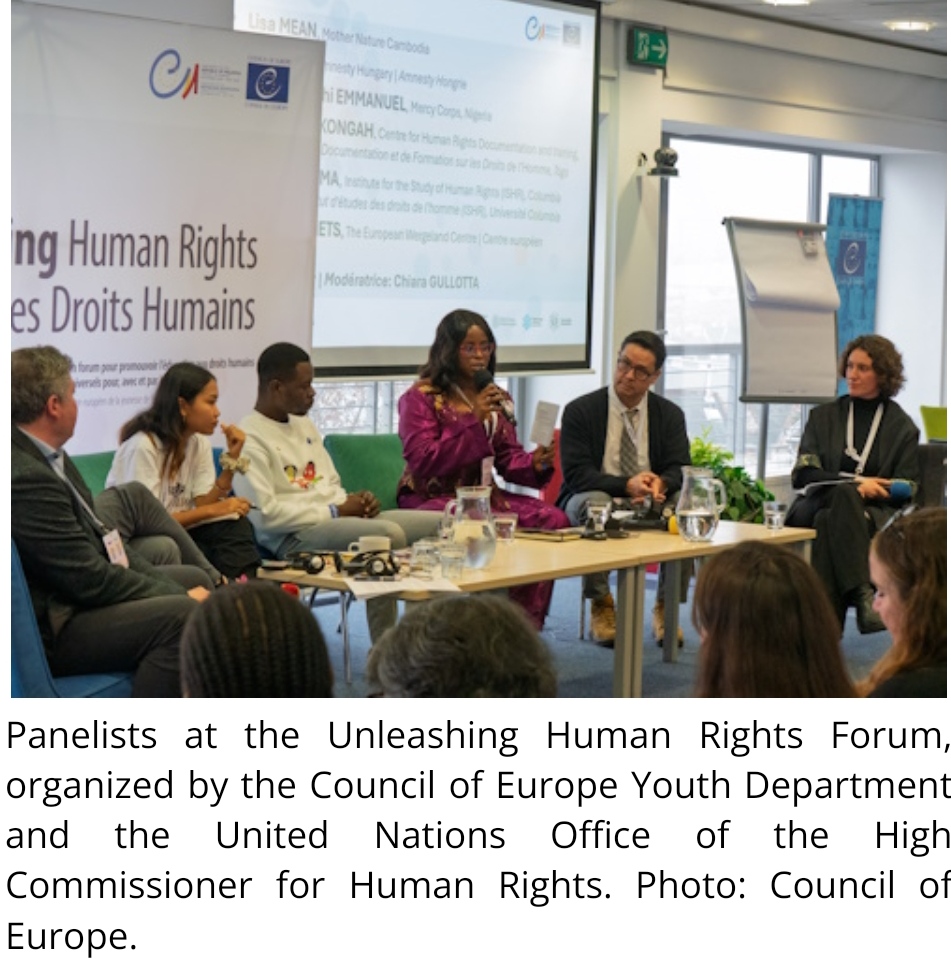
While Geneva focused on innovation and systems, Budapest focused on education, identity, and the courage of young people. Unleashing Human Rights, held at the European Youth Centre, was a powerful reflection on the state of human rights education.
Speakers did not shy away from the truth. The world is experiencing a human rights crisis. Democratic backsliding. Conflict. Polarization. Shrinking civic spaces. And rising fear. But instead of giving in, the forum chose to confront these challenges with honesty and hope.
Matjaž Gruden spoke about the new democratic pact for Europe and the mistake of assuming democracy would always expand. Marie Struthers from Amnesty International delivered a strong warning about repression across Eastern Europe and Central Asia. And Nina Grmuša used a Harry Potter metaphor to remind educators that when systems weaken, teachers and mentors become the first line of defense.
The conversations were raw, urgent, and necessary. Youth participants spoke about feeling hopeful but tired, passionate but worried. Panelists highlighted the growing attacks on educators and activists, the need for stubbornness, and the importance of making human rights education both formal and non-formal.
The final message of the Budapest forum was simple: education is the engine of human rights. It is where agency is born. It is where voices gain strength. It is where courage is shaped.
The Heart of Human Rights Day 2025.
Across the world, from Geneva to Budapest, from global leaders to young activists, the message of this year’s celebration is clear:
Human rights are our everyday essentials.
- They guide how we live.
- They protect what we value.
- They hold the world together when everything feels uncertain.
This year is a call to return to what matters: dignity, fairness, justice, and humanity. It is a call to remember that every right we defend today protects someone’s tomorrow. It is a call to act, to teach, to innovate, and to believe again in the simple promise made in 1948.
Human Rights Day 2025 is not just a date. It is a reminder that humanity works best when dignity is at the center of everything we do.
Written by Olivier Noudjalbaye Dedingar, USA/UN Correspondent.