
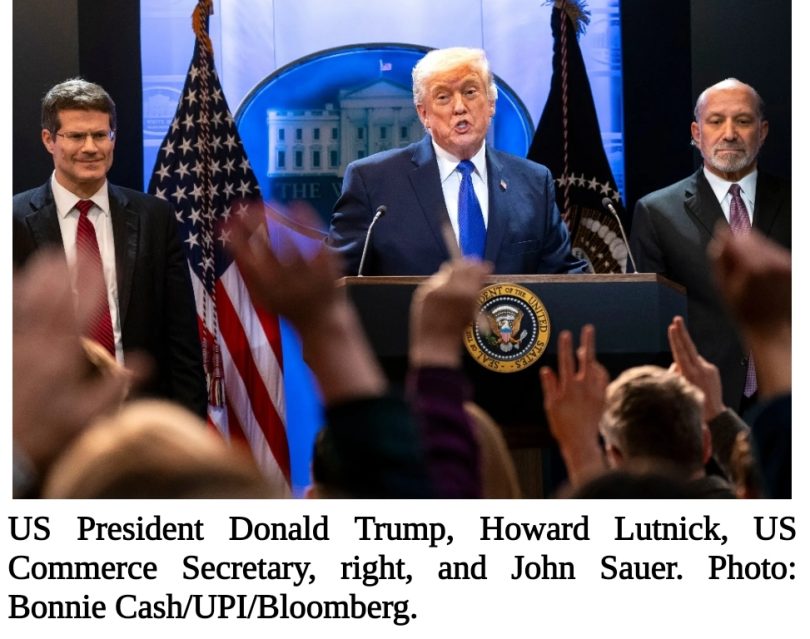

A new chapter in United States trade policy opened at midnight on Tuesday as a blanket 10% tariff on imported goods came into force, days after the Supreme Court rebuked President Donald Trump’s previous tariff architecture.
The move is at once tactical and political. Tactical because it restores a baseline duty after the judiciary dismantled much of the earlier regime. Political because President Trump has already signaled that 10% is not the destination, It is a waypoint. His stated objective is 15%.
The sequence matters.
Last week, in a six-to-three decision, the Supreme Court of the United States ruled that Trump exceeded his authority under a 1977 statute when he imposed sweeping country-specific tariffs. The court’s conservative majority concluded that the executive branch had stretched emergency economic powers beyond their statutory limits. The ruling struck down duties that ranged from 10% to as high as 50%. Within days, the administration pivoted.
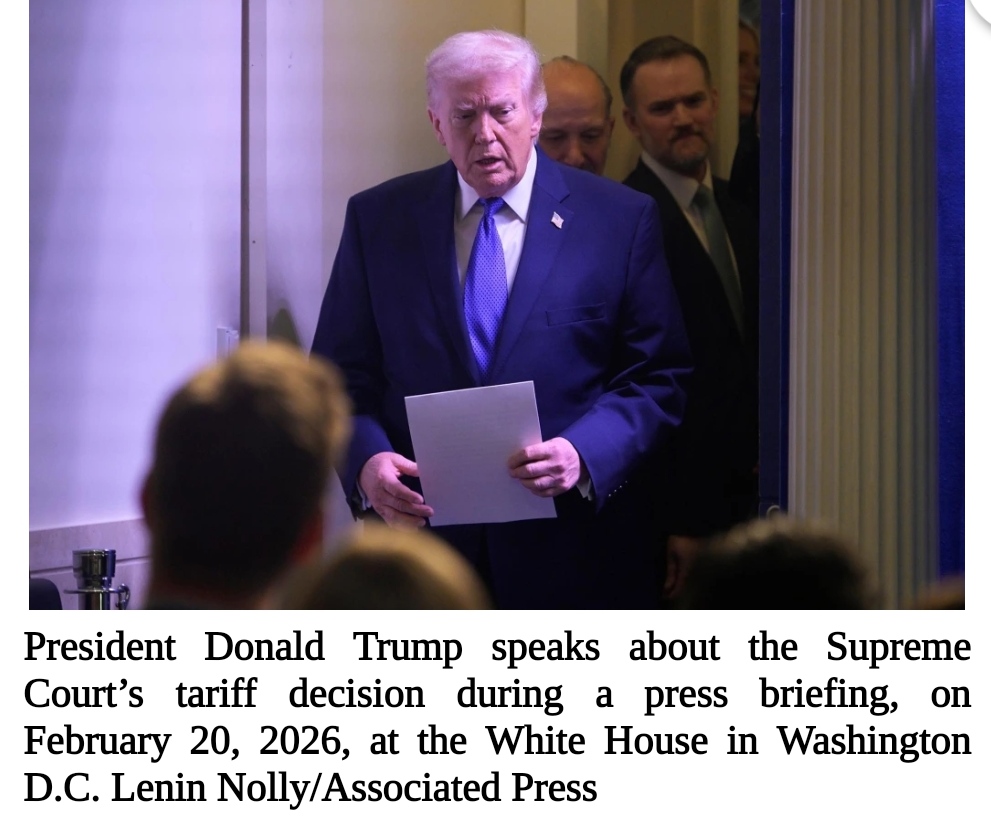
Acting under Section 122 of the Trade Act of 1974, the White House introduced a temporary global tariff of 10% on nearly all imported goods not covered by exemptions. The collection began immediately. Simultaneously, enforcement of the invalidated tariff schedule ceased.
A Legal Reset, not a Policy Retreat
The White House insists this is not a reversal. The 10% rate, in this framing, is an interim measure designed to withstand judicial scrutiny while preserving leverage.
The distinction between the 1977 law previously invoked and Section 122 of the 1974 Trade Act is not semantic. It is constitutional. Section 122 allows the president to impose temporary import surcharges of up to 15% for 150 days to address serious balance of payments deficits. Crucially, any extension requires congressional approval.
In effect, the administration has shifted from an expansive interpretation of executive emergency powers to a narrower, time-bound statutory mechanism. The ceiling is lower, but the duration is capped, and the congressional role is explicit.
Yet the policy objective remains intact: increase the effective tariff rate and restructure trade flows.
The Balance of Payments Argument
The White House justifies the new duty as a response to what it describes as a severe imbalance in the United States external accounts. According to the administration, the United States faces:
- A $1.2 trillion annual goods trade deficit
- A current account deficit equivalent to 4 % of GDP
- A reversal of its historical primary income surplus
From the administration’s vantage point, tariffs are corrective tools. They are designed to compress import demand, incentivize domestic production, and rebalance the external sector.
Critics counter that such measures risk raising input costs, compressing corporate margins, and reigniting inflationary pressures. The empirical record of tariffs as a tool for closing structural trade deficits is mixed at best. Trade balances reflect macroeconomic fundamentals, including savings rates, fiscal deficits, exchange rates, and capital flows. Tariffs alone rarely recalibrate those forces.
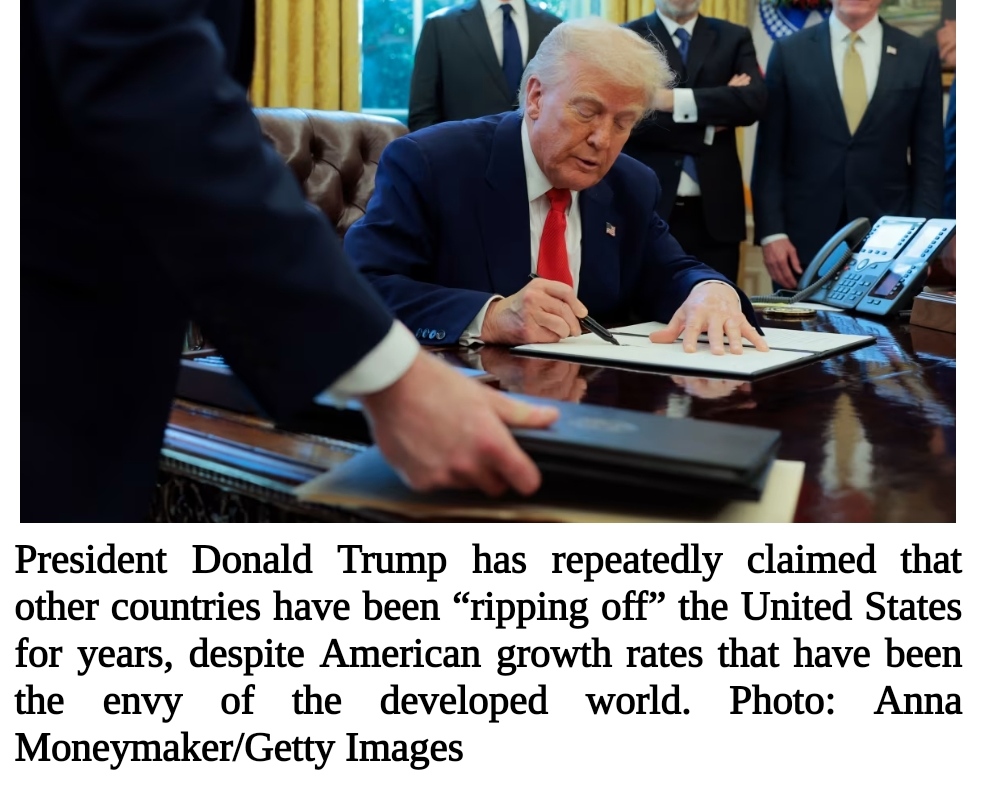
Nonetheless, Trump’s calculus is not purely technocratic. It is also electoral. Trade remains a potent political issue, particularly in industrial regions that experienced manufacturing decline over the past three decades.
Policy Volatility, Market Uncertainty and Foreign Response
The abrupt transition from invalidated tariffs to a fresh global levy has amplified uncertainty in financial markets and corporate boardrooms.
Deutsche Bank noted in a research brief that while the immediate effective tariff rate has changed, the medium-term trajectory remains unclear. Analysts suggested that the post-ruling environment may ultimately result in lower effective tariffs than the pre-ruling regime, particularly if congressional oversight constrains escalation.
Beijing reacted with predictable language but calibrated tone. China’s Commerce Ministry urged Washington to abandon what it termed unilateral tariffs, while signalling openness to another round of negotiations. This dual message reflects a familiar pattern: rhetorical opposition coupled with pragmatic engagement.
The principal tension remains structural. The trade relationship between the United States and China is deeply integrated yet strategically fraught. Tariffs function not only as economic measures but as signals of geopolitical posture.
Whether China adjusts its countermeasures in response to the 10% levy will depend on two variables: the durability of the policy and the likelihood of escalation to 15%.
On the other hand, Japan’s response illustrates the balancing act facing US allies. Tokyo has requested assurances that its treatment under the new regime will remain as favourable as under existing agreements. With the Japanese prime minister scheduled to visit Washington next month, the government is treading cautiously.
Japanese officials confirmed that Trade Minister discussions with US Commerce Secretary Howard Lutnick reaffirmed a commitment to implement last year’s bilateral trade deal in good faith.
Japan’s position is pragmatic as it seeks continuity. Any increase in tariff costs on key export sectors such as automobiles or electronics could have a material economic impact. At the same time, Tokyo is reluctant to escalate rhetoric ahead of high-level diplomatic engagements.
For the European Union, the situation is procedurally complex. Brussels previously agreed to a trade framework that included a 15% base tariff rate. The introduction of a temporary 10% global levy creates a transitional overlap.
European Commission Trade Commissioner Maros Sefcovic characterised the current phase as transitional, noting reassurances from US officials that Washington will honour its commitments. However, the discrepancy between a negotiated 15% base rate and a temporary 10% global rate generates interpretive ambiguity.
If Trump ultimately moves the global rate to 15%, the EU arrangement may simply converge with the broader framework. If not, the bloc will need clarity on relative treatment.
The 150 Day Clock
The most consequential variable is time. Section 122 authorizes the tariff for 150 days unless Congress approves an extension. This embeds a legislative checkpoint into the policy trajectory.
Congress now becomes a pivotal actor. Should lawmakers align with the administration, a higher or extended tariff regime becomes plausible. Should they resist, the policy may lapse or require redesign.
This time-bound structure may also influence negotiations with trading partners. The administration can leverage the ticking clock to accelerate talks, arguing that failure to secure concessions could result in higher duties before the statutory window closes.