
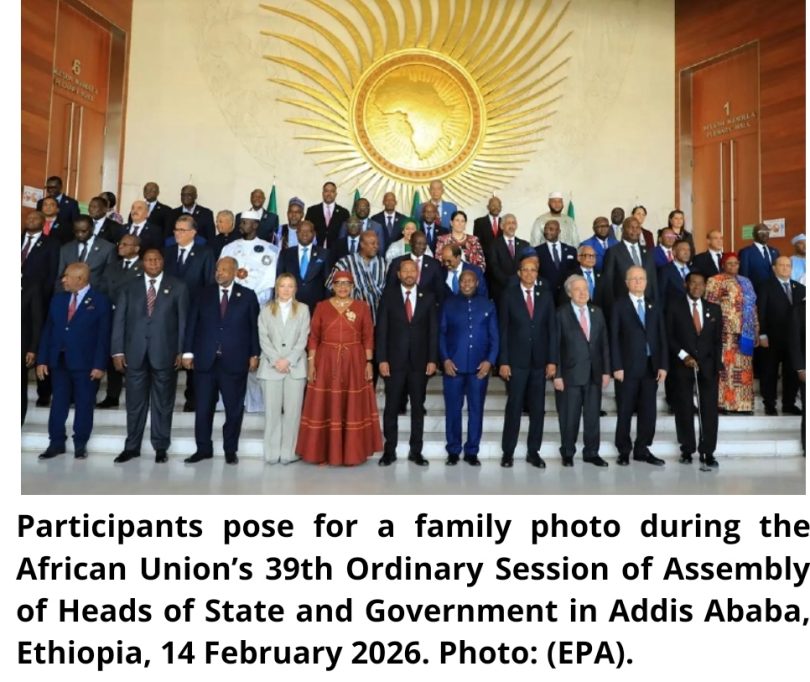

For a continent navigating the crosscurrents of rising global polarization and institutional fragility, the 39th Ordinary Session of the African Union (AU) Assembly concluded this week with a pragmatic refocusing of its strategic modus operandi. As the motorcades departed the AU Headquarters in Addis Ababa, the narrative of the summit had shifted from the usual abstractions of diplomacy toward the visceral, life-sustaining politics of “blue gold” the continent’s increasingly scarce water resources.
The assembly, which brought together Heads of State and Government from across the continent, was characterized by a pivotal transition in leadership. Angolan President João Manuel Gonçalves Lourenço, who chaired the Union throughout 2025, handed the gavel to President Évariste Ndayishimiye of the Republic of Burundi. The change in leadership comes at what observers described as a sobering juncture, as the continent grapples with a resurgence of unconstitutional changes of government and a widening gap in infrastructure financing.
A Sobering Picture of Water Security
The 2026 theme, “Assuring Sustainable Water Availability and Safe Sanitation Systems to Achieve the Goals of Agenda 2063,” served as more than just a titular framework; it was presented as a strategic priority essential for Africa’s development, public health, and stability. The statistics circulated in the high-level deliberations painted a sobering picture of the challenges ahead: approximately 400 million people on the continent lack access to water for their daily needs, while over 800 million live without basic hygiene services.
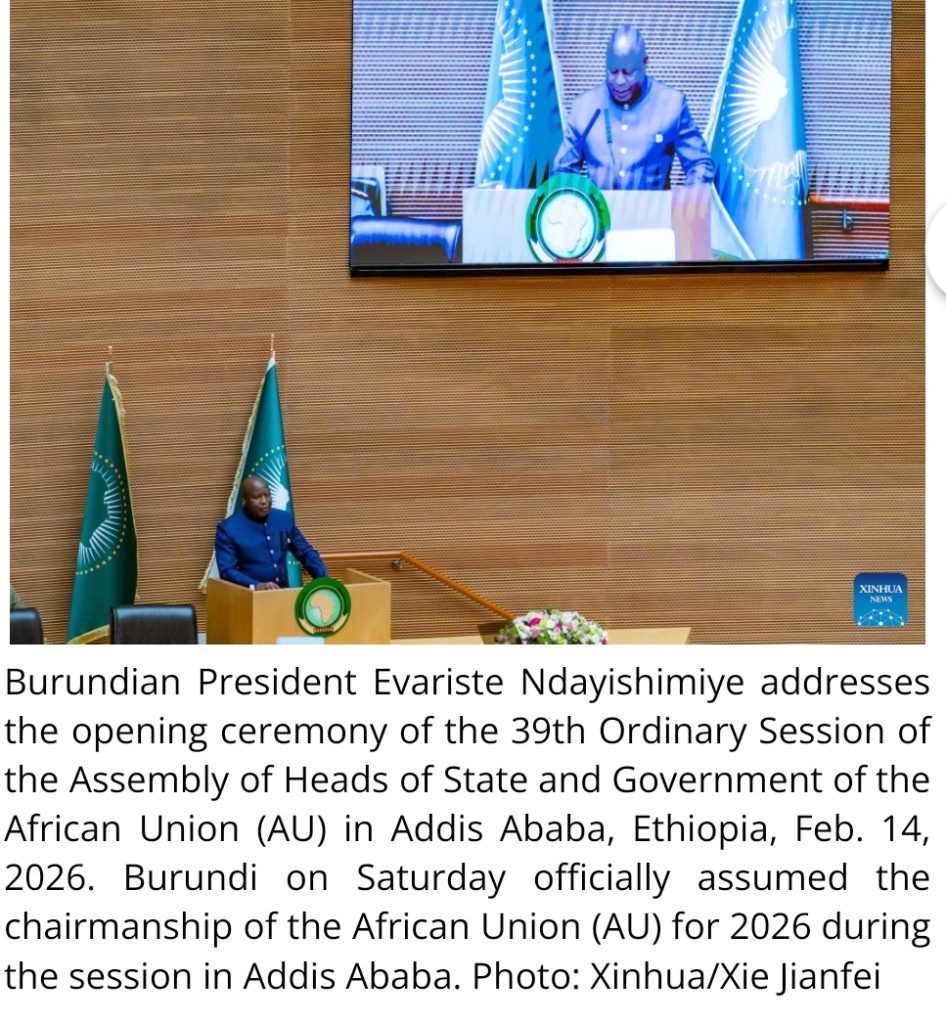
Outgoing Chairperson João Lourenço framed water access as a “political, moral, and strategic priority.” His remarks underscored the belief that without a massive infrastructure overhaul in the water sector, the ambitious milestones of Agenda 2063, Africa’s 50-year blueprint for inclusive growth, remain fundamentally out of reach.
The Assembly noted that water scarcity is not merely a humanitarian issue but a driver of conflict. In regions like the Sahel and the Horn of Africa, competition for dwindling resources has exacerbated existing tensions, making the “silencing the guns” initiative increasingly difficult to realize. Consequently, the Union is moving toward an integrated management system for transboundary water resources, viewed as an instrumental step in mitigating regional friction.
Challenging the Global Governance Modus Operandi
While the internal focus was on water, the external dialogue was dominated by a demand for a fundamental recalibration of Africa’s standing in global governance institutions. United Nations Secretary-General António Guterres delivered a stinging critique of the current international order, characterizing the absence of a permanent African seat on the UN Security Council as “indefensible.”
This is 2026 not 1946,” Mr. Guterres remarked, signaling that the strategic partnership between the UN and the AU has reached “new heights.” He emphasized that whenever decisions regarding Africa or the world are on the table, Africa must be “at the table.” The host echoed this demand for equitable representation, Ethiopian Prime Minister Abiy Ahmed, who urged member states to shift from reacting to global events to actively shaping the global agenda.
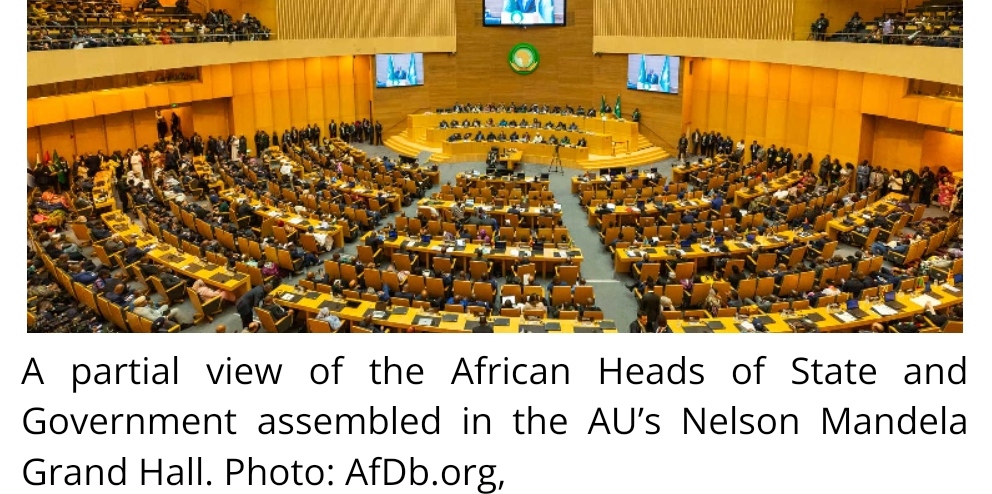
For Prime Minister Abiy, true sovereignty is found in “owning Africa’s narrative.” He highlighted Ethiopia’s efforts in technological autonomy, including the establishment of Artificial Intelligence institutes, as a template for a continental shift toward self-reliance. The Assembly reaffirmed Africa’s Common Position on the Reform of the United Nations Security Council, reiterating that the continent’s growing influence in world affairs must be reflected in the council’s permanent structure.
Peace, Security, and the Zero-Tolerance Doctrine.
Despite the thematic focus on development, the persistence of conflicts remained a primary concern for the Peace and Security Council (PSC). The Assembly expressed deep concern over the hostilities in Sudan, the eastern Democratic Republic of Congo, and the rising threat of violent extremism in the Sahel.
The Heads of State reaffirmed their unwavering commitment to a “zero-tolerance” policy regarding unconstitutional changes of government. This doctrine has become increasingly relevant as institutional fragility has led to a string of military takeovers in recent years. Outgoing Chair João Lourenço warned against the “legitimation of coups” through subsequent elections, urging African leaders to adopt measures that deliver tangible results for their citizens to reinforce the resilience of democratic institutions.
Furthermore, the Assembly underscored the “imperative of predictable, sustainable, and flexible financing” for AU-led peace support operations. With external funding from traditional partners on the decline, the Chairperson of the AU Commission, Mahmoud Youssouf, stressed that domestic resource mobilization and faster implementation of flagship programs are now essential conditions for sustainable growth.
Economic Integration and the AfCFTA Pipeline
The operationalization of the African Continental Free Trade Area (AfCFTA) remained a cornerstone of the economic discussions. The Assembly commended the progress made in the trade area but called for accelerated implementation to bolster intra-African trade, industrialization, and value addition.
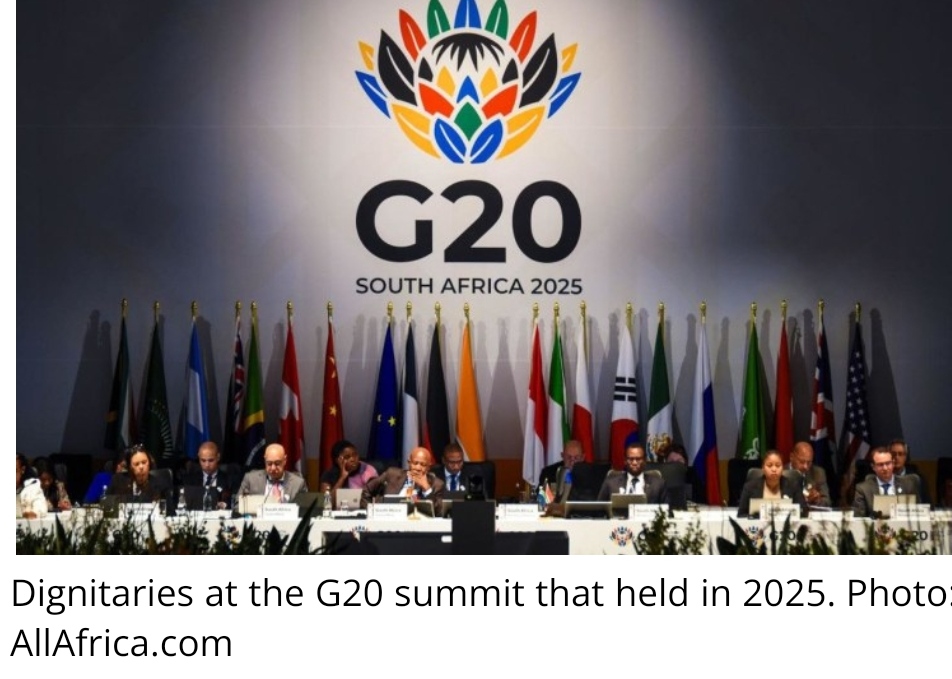
The move toward economic integration is increasingly viewed as a defense against geopolitical fragmentation. By creating a unified market, the AU hopes to foster a “stronger, more autonomous and prosperous Africa” that can better withstand global economic shocks. The briefing on the G20 Leaders’ Summit held in Johannesburg in late 2025 served as a benchmark for this new era of coordinated African diplomacy, where the continent uses its permanent seat in the G20 to advocate for debt restructuring and climate justice.
The Quest for Historical Justice
In one of the more analytical sessions of the summit, the Assembly considered a study on the implications of describing colonization as a crime against humanity. The discussion explored whether certain acts committed during the era of slavery and deportation should be formally recognized as acts of genocide against the peoples of Africa.
Leaders emphasized the importance of historical justice, truth, and reparatory justice in preserving the dignity of African peoples. This focus on “remembrance” is seen as a way to ground the Union’s future in a clear-eyed understanding of its past, ensuring that the drive toward 2063 is built on a foundation of restored sovereignty.
A Pivotal Transition: The Burundi Era
As President Evaristo Ndayishimiye assumed his mandate for 2026, he was joined by a newly elected Bureau representing the various regions of the continent: Ghana (West), Tanzania (East), and Angola (South), with the North African representative yet to be confirmed. This regional balance is intended to ensure that the “Burundi Era” maintains a continental perspective on its primary goals.
Chairperson Mahmoud Youssouf noted that the summit arrived at a time of “mounting geopolitical turbulence.” The weakening of multilateralism has forced the AU to look inward, identifying institutional reform and financial self-reliance as the only viable paths forward.
Conclusion: The Long Road to 2063.
The 39th Ordinary Session may be remembered as the moment the African Union moved past the “limbo” of external dependency and toward a more pragmatic, data-driven approach to sovereignty. By identifying water security as a strategic priority, the Assembly has signaled that it understands that the “process” of development must begin with the most basic of infrastructures.
The road ahead is undoubtedly long. The sobering statistics on sanitation and the persistent “guns” that have yet to be silenced suggest that the transition to a functional and integrated Africa will require more than just high-level declarations. However, as the 2026 mandate begins under President Ndayishimiye, there is a palpable sense that the continent is finally taking the wheel of its own destiny, determined to shape a narrative that is as much about modern innovation as it is about historical justice.