
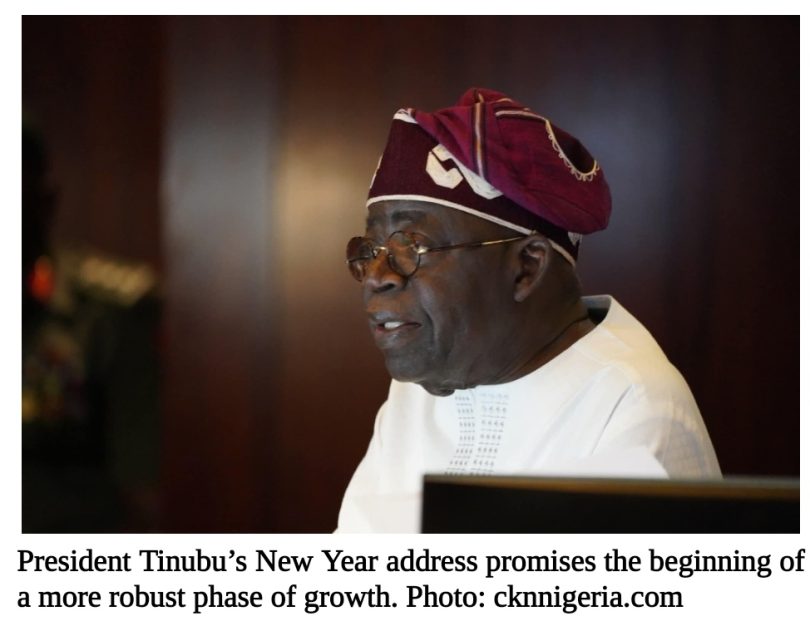

President Bola Ahmed Tinubu has declared that 2026 will mark the beginning of a more robust phase of economic growth for Nigeria, outlining a year anchored on lower inflation, stronger foreign reserves, sustained GDP expansion, and deeper structural reforms designed to translate macroeconomic gains into household-level impact.
In his New Year message to Nigerians on Thursday, the President struck a note of confidence and resolve, positioning the new year as a turning point after what he described as a period of difficult but necessary adjustment. According to the President, 2025 closed with Nigeria on a firmer economic footing, despite persistent global headwinds, including tightening financial conditions, geopolitical instability, and supply chain disruptions.
“These achievements reaffirm our belief that the difficult but necessary reforms we embarked upon are moving us in the right direction,” Tinubu said, “with more concrete results on the horizon for the ordinary Nigerian.”
An Economy Emerging from Reset
At the center of Tinubu’s message was the assertion that Nigeria’s economic reset is beginning to yield measurable outcomes. He disclosed that the country is expected to record annualized GDP growth exceeding four per cent for 2025, a figure that signals renewed momentum after years of fragility and uneven expansion.
Trade surpluses, he noted, were sustained throughout the year, while greater stability was achieved in the foreign exchange market. Inflation, one of the most politically sensitive indicators for Nigerian households, declined steadily to below 15%, aligning with targets set by his administration.
“In 2026, we are determined to reduce inflation further and ensure that the benefits of reform reach every Nigerian household,” the President said.
The emphasis, he stressed, will now shift toward consolidation, distribution, and resilience.
Markets, Reserves, and Investor Confidence.
Tinubu also pointed to the performance of Nigeria’s capital markets as a signal of returning confidence. The Nigerian Stock Exchange, he said, posted a 48.12% gain in 2025, extending the bullish run that began in the second half of 2023. The rally, in his telling, reflects improved sentiment around fiscal discipline, monetary coordination, and long-term policy direction.
Foreign reserves offered another pillar of reassurance. As of December 29, 2025, reserves stood at $45.4 billion, providing, as Tinubu described, a substantial buffer against external shocks and renewed support for the naira. He expressed optimism that the position would strengthen further in 2026 under continued sound monetary management.
Foreign direct investment, long seen as a barometer of international confidence, also featured prominently in the President’s message. In the third quarter of 2025 alone, FDI rose to $720 million, a sharp increase from $90 million in the preceding quarter. Tinubu attributed the rebound to renewed investor confidence, reinforced by positive assessments from global credit rating agencies including Moody’s, Fitch, and Standard & Poor’s.
Fiscal Discipline and the 2026 Budget
The President used the New Year message to reiterate the significance of the 2026 Appropriation Bill recently presented to the National Assembly. He described the budget as a continuation of reforms already underway, designed to entrench fiscal discipline while expanding the government’s capacity to invest productively.
Tinubu said his administration expects increased fiscal space to accelerate investment in infrastructure and human capital development. Roads, power, ports, railways, airports, pipelines, healthcare, education, and agriculture were all identified as priority sectors critical to food security, productivity, and quality of life.
He also commended states that have aligned with the national tax harmonization agenda, adopting unified tax laws aimed at reducing the excessive burden of multiple taxes, levies, and fees on citizens and basic consumption. According to Tinubu, 2026 will be a decisive year for implementing tax reforms intended to build a fairer, more competitive, and more predictable fiscal foundation.
Security, Decentralization, and State Capacity
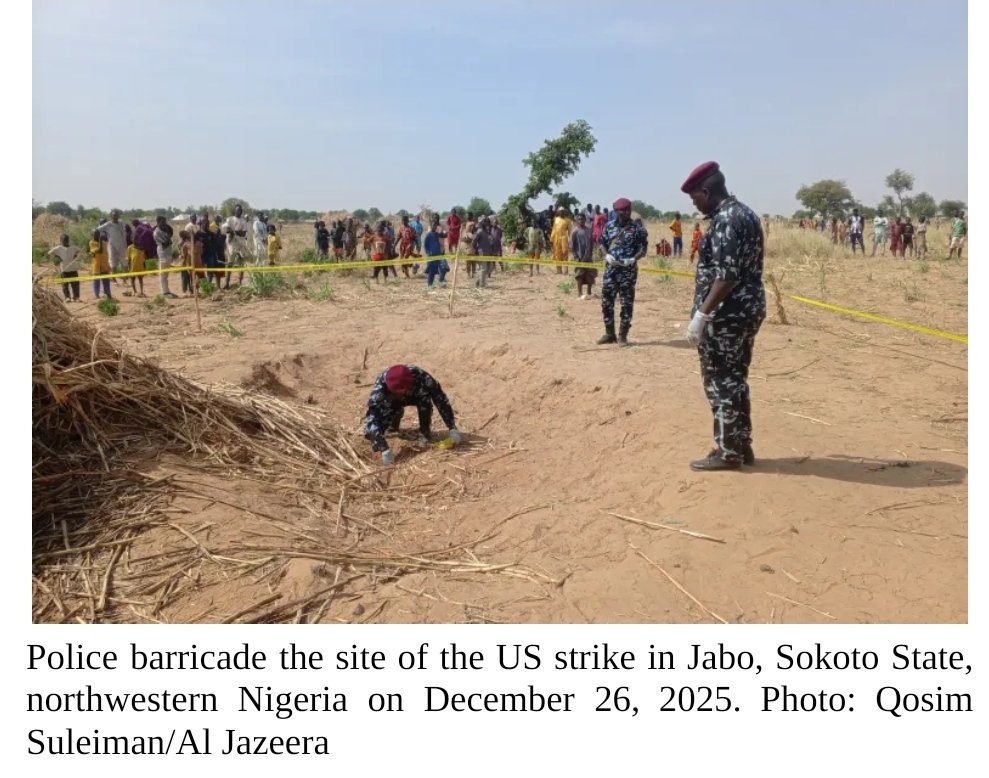
Beyond economics, Tinubu acknowledged that security remains a defining challenge for the country. He confirmed that in collaboration with international partners, including the United States, decisive actions were taken against terrorist targets in parts of the Northwest on December 24. These operations, he said, have since been sustained across the Northwest and Northeast.
“In 2026, our security and intelligence agencies will deepen cooperation with regional and global partners to eliminate all threats to national security,” the President stated. “We remain committed to protecting lives, property, and the territorial integrity of our country.”
Renewed Hope at the Grassroots.
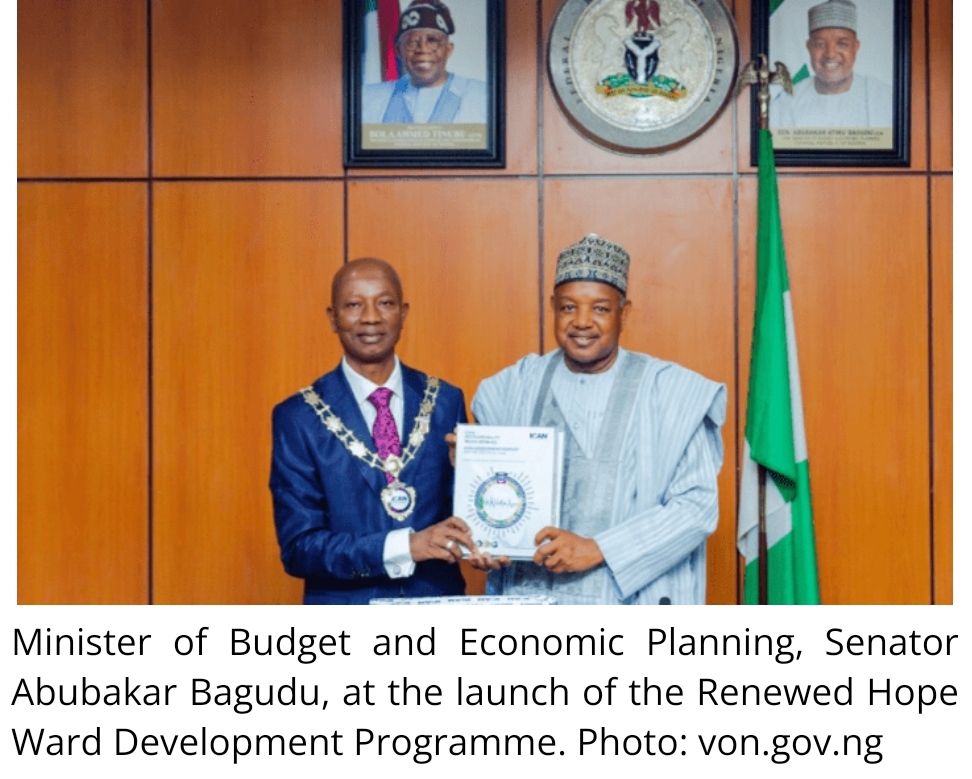
Looking ahead, Tinubu announced plans to accelerate the Renewed Hope Ward Development Programme, an initiative aimed at bringing at least 10 million Nigerians into productive economic activity by empowering no fewer than 1,000 people in each of the country’s 8,809 wards.
Through agriculture, trade, food processing, and mining, the programme is expected to stimulate local economies, expand grassroots opportunities, and reduce vulnerability. The emphasis, Tinubu said, will be on productivity rather than dependency.
A Call for Collective Responsibility
The President closed his message with a call for unity, patriotism, and shared responsibility. Nation-building, he argued, cannot be outsourced to government alone.
“To achieve our objectives in 2026, we must all play our part,” Tinubu said. “Nation-building is a shared responsibility.”
He urged Nigerians to commit to service with honor and integrity, to be better citizens and neighbors, and to act as stewards of the country’s future.
“Fellow Nigerians, I wish you all a peaceful, productive, and prosperous New Year,” the President concluded. “May God continue to bless and protect our beloved country, keep our troops safe, and destroy the enemies bent on disrupting our national peace, security, and stability.”