
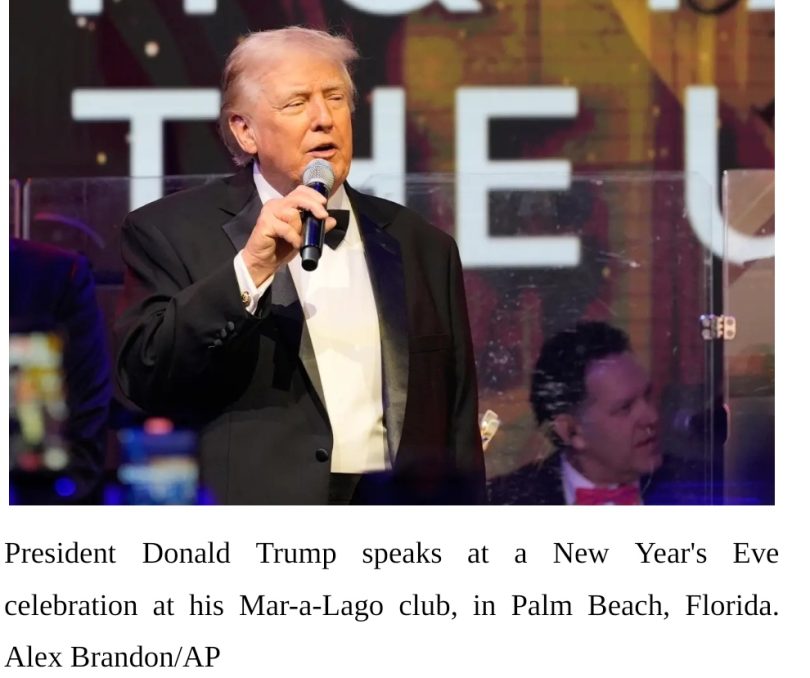

President Donald Trump did not deliver a formal New Year’s address to the nation as the calendar turned to 2026. There was no Oval Office broadcast, no teleprompter, no carefully staged remarks designed for prime-time television. Instead, Trump ushered in the new year in characteristically unscripted fashion, offering a brief but pointed New Year’s message from the steps of his Mar-a-Lago club in Palm Beach, Florida, moments before heading into a black-tie celebration with allies, family, and global power brokers.
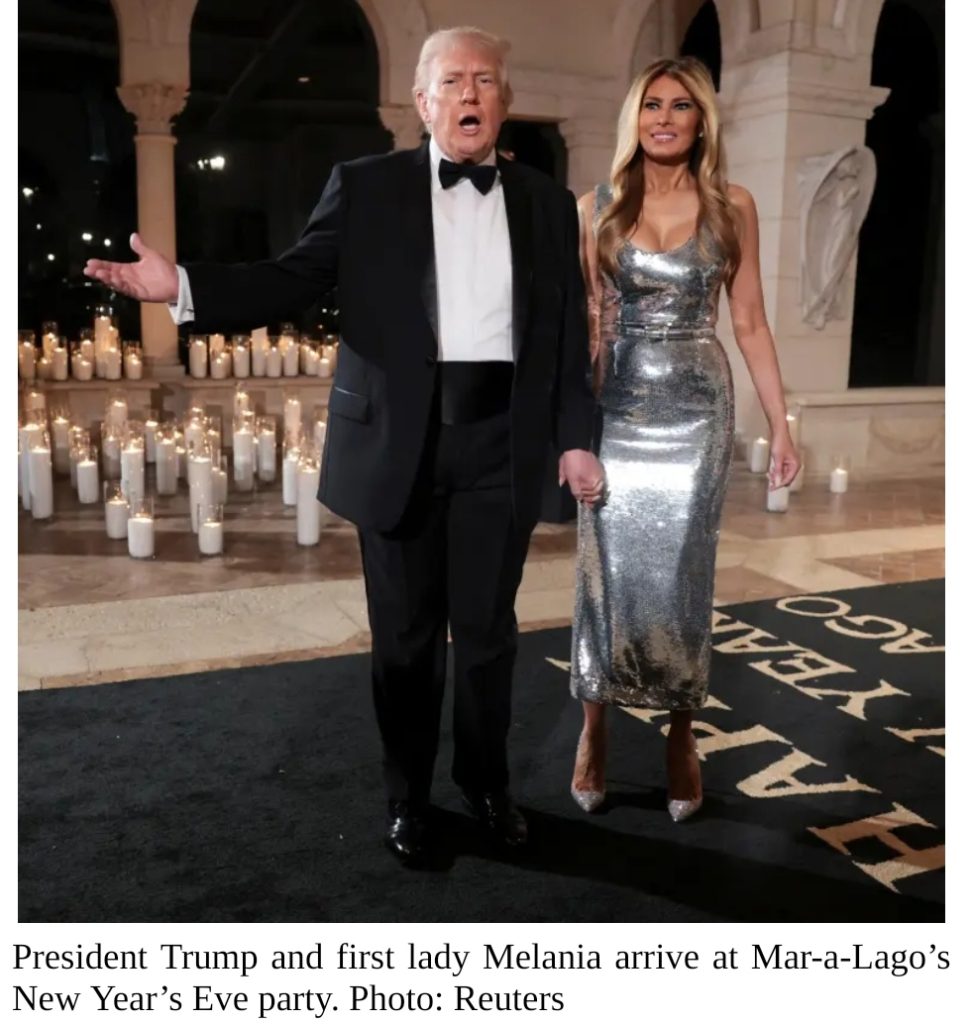
Wearing a tuxedo and flanked by First Lady Melania Trump, who stood beside him in a silver gown that caught the camera lights, the president paused to speak with reporters gathered outside the ballroom.
“Peace on Earth,” Trump said when asked about his New Year’s resolution, before adding, “We’re back. We’re strong.”
It was not a speech in the traditional sense. But in typical Trump fashion, the message was clear: a symbolic reset, a declaration of regained momentum.
Trump’s choice not to deliver an official New Year’s address is consistent with his long-standing skepticism of political ritual for its own sake. Rather than a scripted national broadcast, he opted for proximity, informality, and immediacy. The setting mattered. Mar-a-Lago was not merely a backdrop for celebration; it was a signal. Power, in Trump’s universe, is exercised as much through presence and gathering as it is through prepared remarks.
Within minutes of calling for “peace on Earth,” Trump pivoted to domestic concerns, vowing to “get to the bottom” of what he described as rampant welfare fraud, starting with Minnesota.
“Can you imagine they stole $18 billion,” he said. “That’s just what we’re learning about. That’s peanuts. And California is worse, Illinois is worse, and sadly, New York is worse.”
His framing was blunt and familiar. Fraud was not an isolated issue but a systemic failure, one he described as “a giant scam,” and one his administration intends to pursue aggressively
A Guest List That Signals Influence.
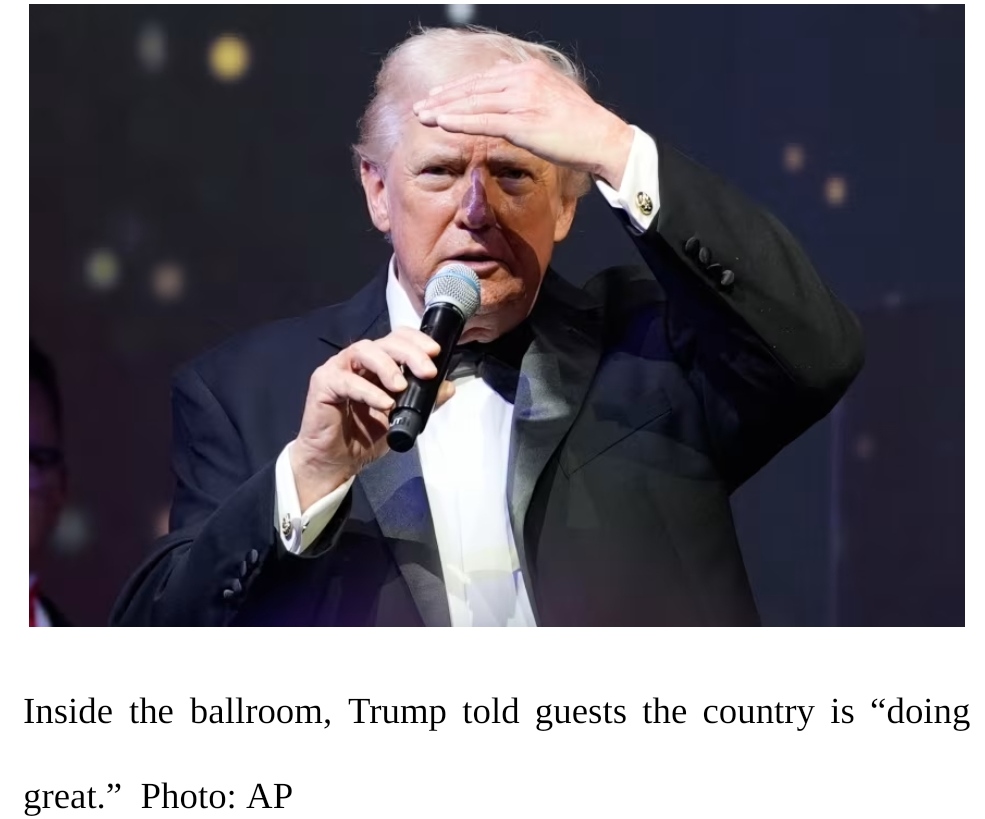
Inside the ballroom, the New Year’s Eve gala unfolded as a carefully curated convergence of political, diplomatic, and financial power. Israeli Prime Minister Benjamin Netanyahu, who had met with Trump days earlier to discuss the status of the Gaza ceasefire agreement, was among the most prominent international figures in attendance.
The presence of Netanyahu lent geopolitical weight to the evening, reinforcing Trump’s ongoing engagement with Middle East diplomacy even as the event itself remained unofficial.
Trump’s inner circle was also well represented. His sons, Donald Trump Jr. and Eric Trump, were spotted alongside Lara Trump. Senior administration officials and long-time allies filled the room, including Homeland Security Secretary Kristi Noem, DC US Attorney Jeanine Pirro, Representative Tom Emmer of Minnesota, former New York City Mayor Rudy Giuliani, White House deputy chief of staff Dan Scavino, and US Ambassador to India Sergio Gor.
The guest list extended beyond politics into global finance and industry. Emirati billionaire Hussain Sajwani, who earlier in the year pledged to invest $20 billion in US data centers, was also in attendance, signaling continued alignment between the administration and large-scale private capital.
“We have a lot of leaders,” Trump remarked of the room, a statement that doubled as observation and assertion.
Faith, Charity, and Performance
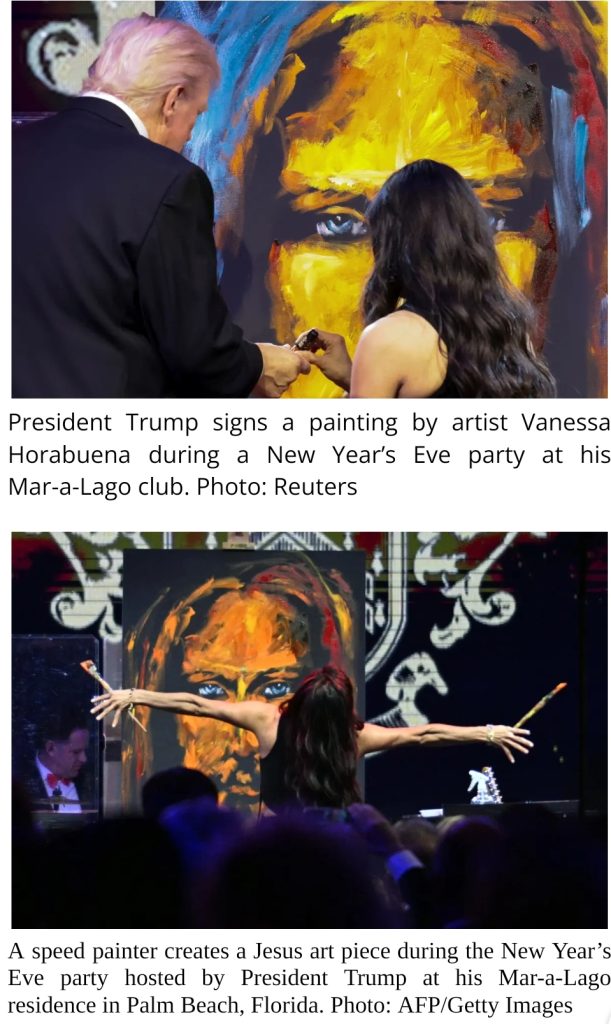
The evening was not without its symbolic gestures. Christian worship artist Vanessa Horabuena performed a live speed-painting of Jesus during the gala, blending faith and spectacle in a way that resonated with Trump’s base. The finished portrait, Trump announced, would be auctioned for charity.
These people are loaded with cash,” he quipped, gesturing toward the assembled guests.
The auction that followed raised $2.5 million, with proceeds pledged to the local sheriff’s department and St. Jude Children’s Research Hospital.